
The International Fund for Agricultural Development (IFAD) is working in 59 countries in Africa and Asia to combat climate change harms. In Nigeria, it is working with the Federal Government to tackle the low most obvious harms being flooding and unpredictable rains. This involves training of experts to help cascade down the strategies in the states of Nigeria.
The training took place in Port Harcourt, Rivers State, South-South Nigeria. IFAD has partnership with the FG through the Federal Ministry of Agriculture & Food Security with which they created a special purpose vehicle called the Livelihood Improvement Family Enterprise in the Niger Delta (LIFE-ND) which has the Niger Delta Development Commission (NDDC) as a partner.
After the flag-off of the training at Villa Tuscana Luxe in the GRA 2 section of the Garden City, some of the principal officials and experts sat down with newsmen to give insights.
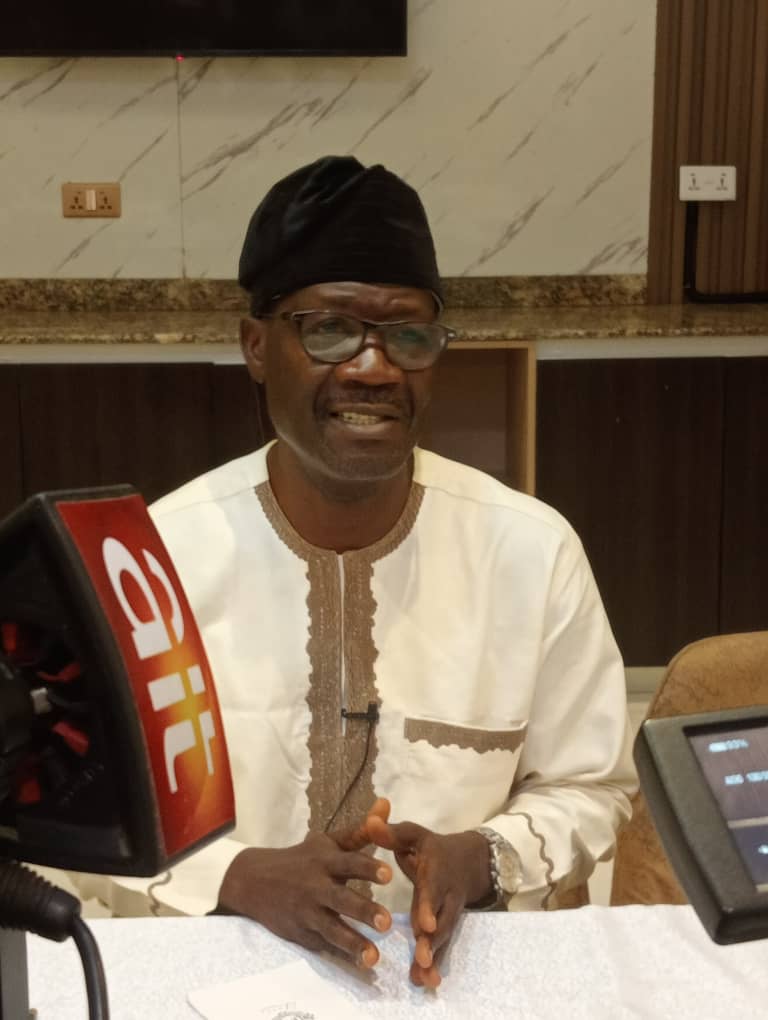
Engr Abiodun Sanni (PhD):
Dr. Abiodun Sanni, the National Project Coordinator, FG/IFAD/NDDC Livelihood Improvement Family Enterprises in the Niger Delta (LIFE-ND), says the national workshop is for police framework direction.
What we are having today is a national workshop for Social Environment Climate Assessment Procedures (SECAP) of IFAD. It is a policy framework direction by IFAD basically to ensure that all projects that are funded by IFAD are environmentally and climate friendly and sustainable in all ramifications.
The major takeaway from this project is that this particular exercise is the determination of the Project to ensure that LIFE-ND is fully compliant socially and environmentally, and also in terms of climate and adaptation. We’ve always moved along this line so we tend to see this as a wake-up call to further intensify efforts in this direction and this we are willing and ready to do.
I believe that this interaction will also further build capacity of staff across board in all states and also at the national level to pursue this agenda and ensure a beneficiary of this project in the Niger Delta takes full benefits of what it can provide for terms of ensuring sustainability, environmentally, socially and also in terms of climate adaptation to all that exists within the environment and what we do.
On NDDC contribution:
The states of Rivers, Imo and Akwa Ibom are now fully on board. As we move along, there will be full integration within the project frame work. We are already doing what we call awareness sensitization and advocacy programme in these states to youths and women that LIFE-ND has fully come on board.
We thank the NDDC for fulfilling its own part of the agreement by putting up a place and providing the funds to drive this project in these three states.
Fund:
LIFE-ND as a project has a funding envelope of $90m across the nine states. IFAD is expected to provide $60, while NDDC is providing $30m.
The project is already in the 6th year of implementation and as far as IFAD is concerned and the FG and the states they’ve been able to fulfil their own conditions by bringing the funds on time but NDDC is just coming on board. That is why we have a slack in implementation in these three states. So the total envelop is $90m for the critical funders (IFAD and NDDC); while the remaining about $25m will come in terms of counterpart funding and also social contributions from other stakeholders that are involved in the project.
$$