
The International Fund for Agricultural Development (IFAD) is working in 59 countries in Africa and Asia to combat climate change harms. In Nigeria, it is working with the Federal Government to tackle the low most obvious harms being flooding and unpredictable rains. This involves training of experts to help cascade down the strategies in the states of Nigeria.
The training took place in Port Harcourt, Rivers State, South-South Nigeria. IFAD has partnership with the FG through the Federal Ministry of Agriculture & Food Security with which they created a special purpose vehicle called the Livelihood Improvement Family Enterprise in the Niger Delta (LIFE-ND) which has the Niger Delta Development Commission (NDDC) as a partner.
After the flag-off of the training at Villa Tuscana Luxe in the GRA 2 section of the Garden City, some of the principal officials and experts sat down with newsmen to give insights.
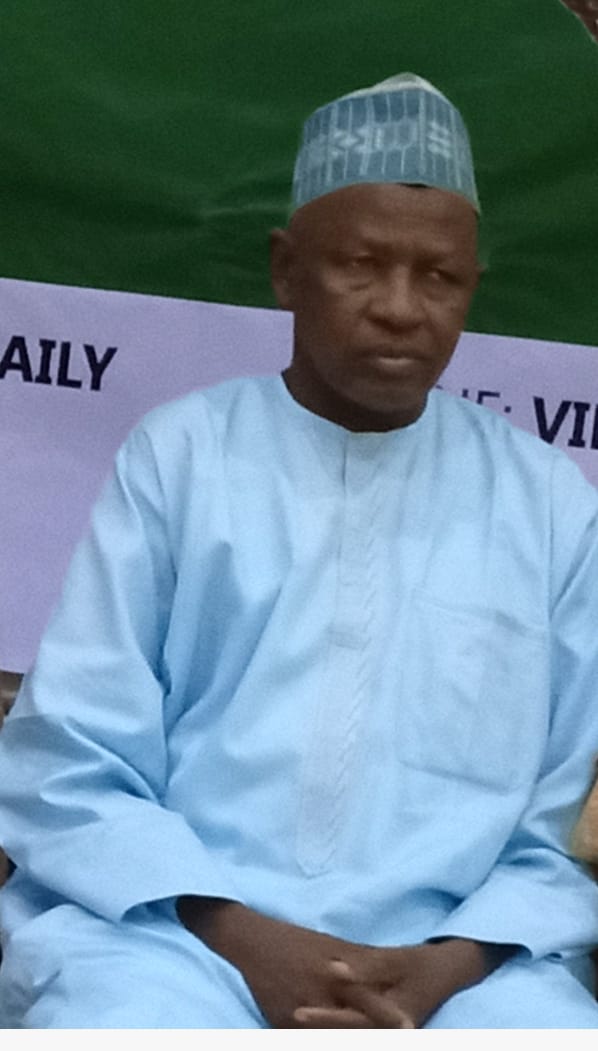
Mr Bukar Musa, Director, Projects Coordinating Unit, Federal Ministry of Agriculture and Food Security.
You know, the International Fund for Agricultural Development (IFAD) is one of the development partners working with the Federal Government of Nigeria. IFAD is funding very many agricultural activities.
Some of the projects currently being funded by IFAD include:
The Value Chain Development Project (VCDP). We have the Livelihood Improvement Family Enterprises in the Niger Delta (LIVE-ND) and the Special Agro Industrial Processing Zone (SAPZ). The VCDP is in Northern Nigeria.
These are all projects that are being funded or partnered by IFAD with the FGN to make sure that the much expected food security, generation of employment, income and awareness to our rural farmers is being enhanced holistically. But you know, one component that is dragging the most achievement of these objectives is the current climate change issue in the environment. The environmental issue becomes very important, bearing in mind the essence such as weather that can’t be predicted. Where you don’t expect rain fall, you see rain fall in March, and where you expect rain fall, you see cessation. Now, the current flooding all over the country affected the already established farms. It is affecting the socio-economic activities of our rural farmers.
That’s why it is very necessary since all the environmental aspects are being incorporated into the project development objectives. It is to bring stakeholders across all the projects, not only in Nigeria, but also to some African countries to brainstorm on the issues of climate and environmental changes. This is with a view to proffering solutions to these issues. It is to bring down the effects as well as solutions to our rural farmers. The essence is for them to take measures right at the farm level in order to mitigate the issues of climate change such as flooding and regular cessation.
In such happenings, we would look at what measures our rural farmers would need to take in order to bring the best soil. That is exactly why we are here, from across all the projects as well as experts from Nigeria and outside of Nigeria so as to train those concerned in environmental aspects across the projects. This is to cascade the training down to our rural farmers in the long run. That is exactly why we are here.
The importance of this to the country cannot be overemphasized, because we hope that from this training, we at least put forward solutions to some of the effects of climate change. That means our farmers will benefit much more. This way, there will be more crop production, there will be impact on the food security measures as well as the other socio-economic aspects from our rural farmers and by extension of the country Nigeria. That is why we are here.
$$