
By Helen Chimezie
Environmental experts and stakeholders of the Ashoka Community of Practice on Climate Justice on Thursday, January 30, 2025 called for a collaborative action to profer indigenous solutions for climate justice in Nigeria.
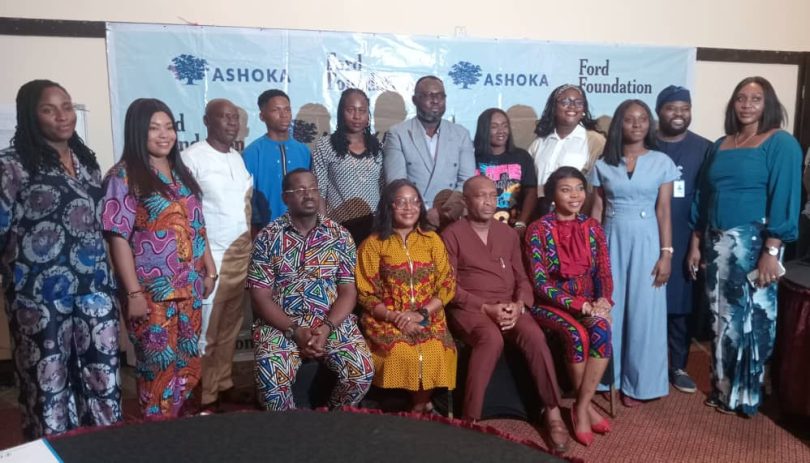
They made the call at the wrapup discussion event of a two-day programme organized by Ashoka Climate Justice Community of Practice (CJCoP) which held on Thursday January 30, 2025, at Ogeyi Place Hotel, Port Harcourt.
The forum’s main goal was to foster conversations together with stakeholders, to highlight climate justice challenges, identify solutions and have culpable actions to follow through.
Speaking at the event, the Regional Director for Ashoka in Anglophone West Africa, Josephine Nzerem, who is also the Director Venture and Talent Ashoka Africa said that the purpose of the event is to ensure that everyone that interfaces with the environment, understand the power that they have to navigate and engage stakeholders to ensure that their environment is protected.
“We are bringing everyone together to look at the problems of climate justice, and also to bring out a solution, because the solution cannot be external. The solution has to be built collaboratively with all the people involved,” she added.
Nzerem pointed out that research findings reveal that many people feel that they do not have a role to play in protecting their environment, relegating such responsibility to the government.
“But we are trying to make them understand that they have a role to play, because they reside in the community, and are the ones suffering the adverse effect of climate change.
Given that you are the one, what are the local remedies that you have to combat these things?
“So it is being aware, having the power to navigate all the corridors of government and all the corridors of power to be able to push for your right. That is why we are here. That is why it is climate justice,” she stated.
She went further to say that climate justice cannot happen when voices of young people and women are not recognized in the journey of climate justice.
“This discussion of climate justice is holistic, we need all hands, and in Ashoka, we believe that ‘everyone is a change maker.
Speaking about the challenges encountered by her team in various communities, she highlighted a significant issue, that women were not receiving the recognition they deserved. Their voices were often overlooked, and they were not provided with a platform to express themselves.
To address this, she revealed that Ashoka is partnering with organizations that are dedicated to empowering women. These organizations will provide trainings that will help rural women realize their potential and encourage them to speak up confidently about issues that affect them.
Commending the Centre for development support initiatives, the Rivers State Commissioner for Environment, Tambari Sydney Gbara, stressed that the Rivers State governor, Sir Siminalayi Fubara, is not only passionate about providing infrastructure for Rivers people, but he is also ensuring that there is human capital development for women, youths and everyone.
He stated that tackling environmental issues is at the front burner of every discuss, even at the international scene, while expressing optimistic that lots of actiins will be birthed in ensuring Rivers State has a sustainable environment.
In closing he said, “It is quite encouraging to see people who have come out on their own to bear some of government burden. So therefore our doors are open to work with you”.
Also commending the organizers of the event, the Rivers State Commissioner for Information and Communication, Warisenibo Joe Johnson said the two-day programme with give alot of visibility to the State.
“Rivers people are quite hospitable, and receive their visitors with open arms. Our governor has a persona of peace, therefore encourages developmental initiatives,” he added.
On her part, Paula Ugwu, the Youth and Partnership Lead for Ashoka in Anglophone West Africa, who doubles as the Lead Climate Justice and Environmental Sustainability Programme for Ashoka in Anglophone West Africa, while delivering the closing remarks thanked the participants for the energy they brought in, and also thanked the Alode Community in Eleme Local Government Area, for their warm reception on the day one of the event, which was on community visit.
On the sideline Ugwu narrated that discussions were made with key stakeholders in the community, inclusive of the women, and after the identification of developmental challenges in the Alode Community, possibly indigenous solutions were also preferred by the community stakeholders. It was indeed a learning experience for the Ashoka team, she pointed out.
In light of an action plan, participants at the event, particularly the younger attendees, were charged to demonstrate a steadfast commitment to addressing climate change and the environmental injustices that are interwined with it.
Highlights of the event were the exchange of corporate pack between the Josephine Nzerem and the two commissioners present at the event, breakout sessions, and the groups’ presentations of the findings from each of the breakout session, capturing the voices of the various stakeholders.
The Community of Practice on Climate Justice was established last year in Rivers State, and their first event which gathered stakeholders in Port Harcourt in April 2024, started the conversations on what climate justice entails, and how people are experiencing it in Rivers State.
This is the Community’s second outing in Port Harcourt, although the conversations were ongoing virtually since after their first event in Port Harcourt.
Ends