
• As legacy projects council pushes non-oil revenue drive
Blessing Ita
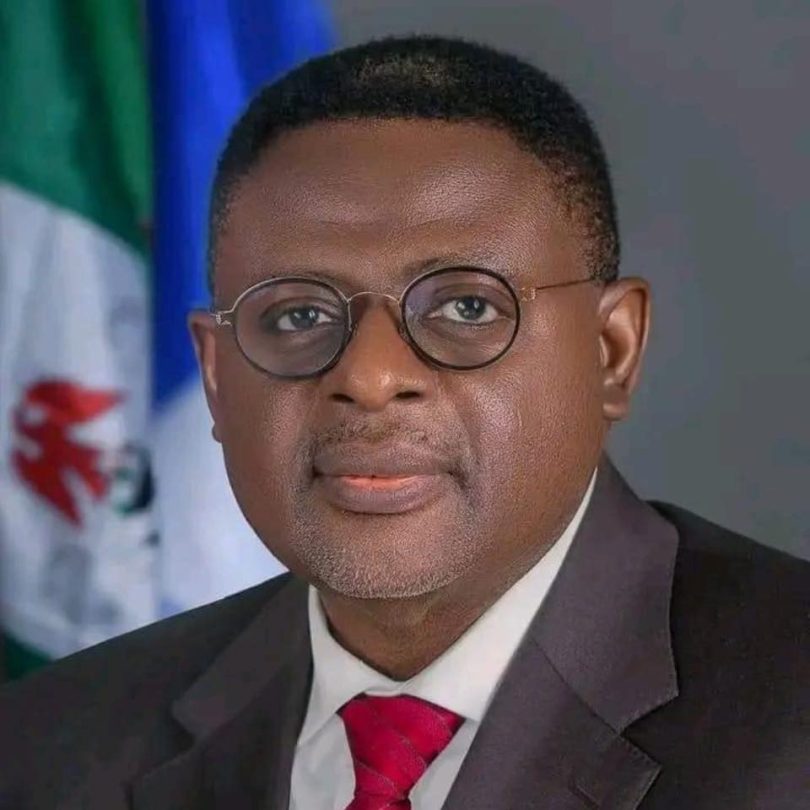
The National Economic Council (NEC) has appointed the governor of Cross River State, Senator Bassey Edet Otu, as chairman of a newly constituted Bi-Partisan Committee on the Actualisation of President Bola Ahmed Tinubu’s Legacy Projects, marking a significant national recognition of his leadership capacity.
The decision was taken during the 156th meeting of the NEC, which was also the Council’s first meeting of 2026, held virtually and presided over by Vice President Kashim Shettima.
The committee was established to oversee the implementation of the President’s directive on priority legacy infrastructure projects, including the Lagos–Calabar Coastal Highway and the Sokoto–Badagry Super Highway, both of which are central to the administration’s Renewed Hope Agenda.
In line with the NEC resolution, one governor from each of the six geopolitical zones will serve as member of the committee: North West – Sokoto State, North East – Gombe State, North Central – Niger State, South East – Abia State, and South West – Lagos State.
The Permanent Secretary of the Ministry of Budget and Economic Planning, Mrs. Deborah Odoh, will serve as Secretary to the committee, while the Ministers of Works and Transportation are also members.
Speaking at the meeting, Vice President Shettima emphasized the urgency of Nigeria’s transition from oil dependence to a resilient non-oil economy, noting that non-oil sectors now account for about 96 percent of Nigeria’s GDP and nearly three-quarters of government revenue.
“Services, agriculture, and other non-oil sectors are increasingly carrying the weight of the economy. The task before us is to deepen this transition through competitive manufacturing, export diversification, and private sector investment,” the Vice President stated.
The Council also resolved to deepen engagement with stakeholders to boost non-oil revenues in line with the economic blueprint of the Tinubu administration.
This followed a presentation by the Minister of Finance and Coordinating Minister of the Economy, Mr. Wale Edun, who outlined Nigeria’s economic priorities for 2026, projecting a 4.68% gross domestic product (GDP) growth driven by ongoing reforms.
According to the Minister, reforms implemented by the administration have stabilised the economy, removed systemic distortions, and enhanced Nigeria’s global standing, thereby strengthening investor confidence.
Vice President Shettima revealed that Nigeria’s economy grew by 3.9 percent in 2025, the fastest in over a decade, but cautioned that the figure remains insufficient to significantly reduce poverty or generate jobs at scale, given the country’s population growth rate.
The NEC also reviewed updates on national accounts, food security initiatives, tax reforms, agricultural value-chain development under the AGROW programme, and the World Bank–Nigeria Country Partnership Framework, which prioritizes early childhood development and human capital investment.
Council members commended the Federal Government’s plans to unlock job-rich growth, enhance agricultural productivity, and implement tax reforms aimed at equity, shared prosperity, and improved revenue generation.
The appointment of Governor Bassey Otu as chairman of the Bi-Partisan Committee is widely seen as a strategic move, positioning Cross River State at the centre of Nigeria’s long-term infrastructural and economic transformation.
$$