
By Blessing Itah
Healthy Life Development Initiative (HELDi) has continued to build the capacity of women and girls to stand firm in society.
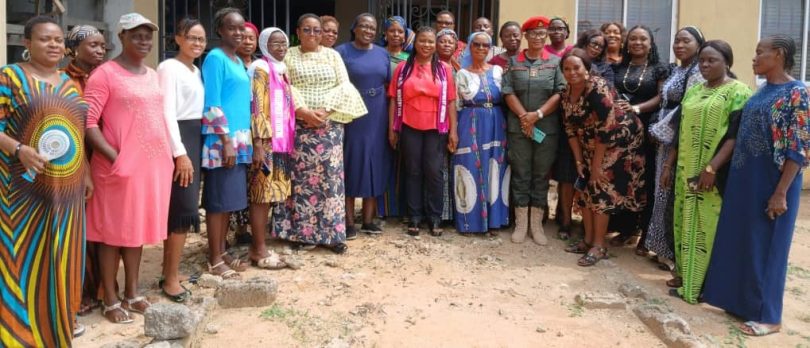
Now, the group has held a capacity building training for ‘Community Women Leaders and Regulators on Trauma Healing and Psychosocial Support’ in Eleme LGA, Rivers State.
The Coordinator of HELDi, Dr Mfon Utin, in the latest training, appreciated the prompt and timely presence of the women at the programme.
The training was said to have brought together strong, dedicated, and committed women leaders from across all communities in Eleme LGA, including Persons with Disability (PWDs), women leaders from faith-based organizations (CAN and Muslim communities), a representative of the National Council of Women Societies (NCWS), the Nigeria Security and Civil Defence Corps (NSCDC), health workers from the Rivers State Primary Health Care Management Board (RSPHCMB), and staff of the General Hospital in Eleme LGA.
According to a report from HELDi, the primary aim of the training was to empower participants with the knowledge, skills, and confidence needed to provide appropriate psychosocial support to survivors of Sexual and Gender-Based Violence (SGBV) within their communities.
The report said emphasis was placed on their critical role in ensuring that survivors receive empathy, understanding, confidentiality, and structured support that promotes healing, restoration, and dignity. “The session reinforced that real and lasting change begins at the community level, particularly through committed women leaders.
“The President-General of Eleme LGA, Chief Israel Abbey, briefly attended and expressed appreciation to HELDi for its impactful work in Eleme. He encouraged the women to participate actively and pledged his support and that of his people toward strengthening community-based responses to SGBV.”
The report stated that the training hall was intentionally arranged with pictorial representations reflecting stigma, depression, and emotional trauma. “These visuals were designed to deepen participants’ understanding of what survivors may silently experience, including fear, shame, isolation, rejection, and psychological distress. Placards bearing messages of hope, healing, resilience, courage, and dignity were also displayed around the hall. These affirmations were intended to guide the women leaders in consistently encouraging survivors, reminding them that they are not alone, that their experiences do not define them, and that recovery is possible.
“The session was facilitated by three professionals. Sr. Bibiana Dura, DC, anchored discussions on understanding SGBV, trauma, and psychosocial support. Madam Martha Uloho facilitated sessions on survivor-centred psychosocial support skills and ethical practice. Dr. Utin facilitated sessions on protection, referral pathways, leadership, and self-care. She emphasized sustaining support and community impact while leveraging leadership skills and training obtained from DePaul University, USA.
“All presentations were interactive and engaging, enriched with real-life scenarios, practical illustrations, group exercises, and practical activities to enhance learning and application.
“Key principles emphasized throughout the training included confidentiality, active listening, informed consent, respect, non-judgmental attitudes, empathy, safety, privacy, accountability, and a do-no-harm approach in supporting survivors. Participants were also guided on preventing re-traumatization and managing secondary trauma that responders may encounter in the field.”
The HELDi Coordinator encouraged participants to collaborate and partner with the Daughters of Charity Congregation, who are present in three communities within Eleme LGA and available for continuous support and engagement.
It was said to be another successful, engaging, and transformative training, as community women leaders, health workers, and a representative of the Nigeria Security and Civil Defence Corps strengthened their capacity to better support survivors of SGBV within their communities.
“Group discussions and presentations demonstrated that participants were well empowered and ready to carry out their responsibilities. Their feedback showed that expectations were met and that they clearly understood their roles as community leaders and first responders.
“Health workers and the NSCDC representative, Madam Prisca Ademola, expressed their commitment to ensuring that survivors receive comprehensive support. Discussions also addressed gaps in institutional response, particularly concerning law enforcement, and emphasized the need for improved accountability.”
It was learnt that HIV self-test kits, supported by Initiative for Advancement of Humanity, were distributed to participants. A practical demonstration on their use was said to have been conducted by Dr. Utin, who emphasized the importance of visiting government health facilities for confirmatory testing if a result is positive.
She further encouraged participants to remain hopeful, noting that people living with HIV can live healthy and productive lives with proper treatment and adherence to medication.
The training was said to have lasted the entire day, and participants left encouraged, equipped, and ready to begin engagement within the safe spaces provided by communities and faith-based organizations.
“At the end of the session, participants understood that they are first responders, advocates, ambassadors, and community champions for trauma healing and psychosocial support. They committed to supporting survivors in regaining their dignity and strengthening protection mechanisms for women and girls in their communities.”
The HELDi Coordinator thanked all participants for their commitment, leadership, and willingness to stand at the frontline of support.
We sincerely appreciate our sponsor for their invaluable support in making the training possible. We also call for increased partnership and sustained support to further empower survivors through economic strengthening initiatives, skills development, and financial empowerment programmes that will enhance their independence, resilience, and long-term recovery.
She said: “Together, we can restore hope, protect rights, and build safer and more resilient communities, especially for our women and girls.”
$$