
• Engages Delta stakeholders on competence, value addition
By Kasarachi Azuka, Asaba
Delta State is said to have vast deposit of gold, tantalite, columbite, cassiterite, lithium-bearing minerals, kaolin, feldspar talc, marble, granite, silica sand, iron ore, and more.
Mining should thus be encouraged to compete with other sectors, so says the Delta State zone of the Nigerian Export Promotion Council (NEPC).
The Council has thus engaged stakeholders in the mining sector of the state, advocating for a shift from exportation of raw solid minerals to value-addition in the value chain.
The engagement is seen as a move to bridge competence gaps of miners in the state so they could penetrate the global market and contribute to the growth of Nigeria’s economy.
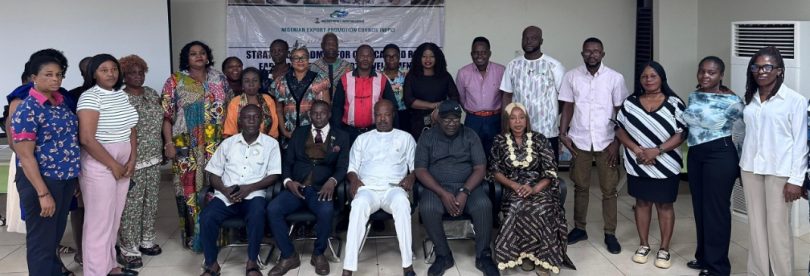
At a one-day workshop organized in Asaba by the NEPC, the council threw a challenge to exporters in the mining sector, to go beyond mere extraction of the mineral resources, noting that the value lies in the entire value chain; processing, manufacturing and innovation.
Nonye Ayeni, the managing director and chief executive officer (MD/CEO) of the NEPC, Abuja, threw the challenge, in her keynote address delivered at the workshop organized for stakeholders in the mining sector of Delta State, with the theme, “Strategic Roadmap for Critical and Rare Earth Minerals Export Development”.
Ayeni who was represented by Peter Onokpasa, the Coordinator, Delta State NEPC Coordinating Office, revealed that Delta State is blessed with vast deposit of gold, tantalite, columbite, cassiterite, lithium-bearing minerals, kaolin, feldspar talc, marble, granite, silica sand, iron ore to mention a few.
She explained that the minerals present enormous opportunities for domestic industrialization and export expansion, adding that the true wealth of those resources lies not in extraction alone but in processing, beneficiation and value addition.
She stated that the minerals position Delta State as a critical contributor to Nigeria’s solid minerals export drive but noted that despite the potentials, the sector is faced with numerous challenges, including informal activities, lack of funding, inadequate mining technology, lack of quality and standards, insufficient geological data, capacity building, to mention a few.
In line with the mandate of the council in promoting the development and diversification of Nigeria’s export trade, she declared, “Today’s engagement is a critical step in the process as it provides a platform for the stakeholders to come together, share ideas and encourage processors on the need for value addition along the value chain through cluster mechanism.”
The council recognizes the contributions of the solid minerals sector to non-oil exports portfolio and the tremendous opportunities on achieving greater economic potentials through the intervention, she said.
She urged all stakeholders to take advantage of the event to tap and gain insights and equip themselves with the understanding of cluster processes to accelerate the growth of their businesses, which she said would translate to the growth of the sector.
In his goodwill message, Eromole Dide, the permanent secretary Delta State Ministry of Trade and Investments and chairman of the state committee on export (SCEP), represented by Felix Oseji, the director of commerce, noted that globally, demand for rare earth minerals is surging, driven by electric vehicles, clean energy solutions and advanced technologies and urged that Nigeria rise to meet the demand rather than remain spectators while others get the benefits of the potentials.
This, he said requires strategy more than ambition – moving beyond mere extraction as the real value lies in the entire value chain; processing, manufacturing and innovation.
He called for collective and decisive action – building strong, investor-friendly policies, prioritize infrastructure, invest in people, ensure security and stability, creating safe environments for investment and growth. Most importantly, we must embrace sustainability, ensuring that development today does not compromise the future of tomorrow, he said.
He equally called for partnership between the public and private sectors, between local communities and global investors, between vision and action even as he described the workshop as a more coordinated effort to unlock the immense potential of the state’s mineral resources.
Oyinka Duke of Solid Minerals Directorate in NEPC, Abuja, in her presentation, expressed hope that the mining sector would begin to compete with other sectors like agriculture, in terms of value addition in the value chain, and formalization.
She called for the miners in the state to identify and work with the NEPC and other relevant stakeholders, organizations and associations so as to help build the sector.
On access to facilities, she said, the exporters would be involved in trade fairs/products exhibitions abroad where they would be exposed to their counterparts and learn the right and better ways of doing things. The exposure would enable them bring investors home for partnership. There are investors ready to invest and bring in facilities for value addition of these minerals, she said.
Kenneth Odita, chairman, Nigerian Association of Miners, Delta State chapter, in an interview, described the programme as a good initiative that would equip mining operators with required knowledge.
He said: “I have involved my people to participate in this programme and they are being linked to the NEPC to register for greater results.”
$$