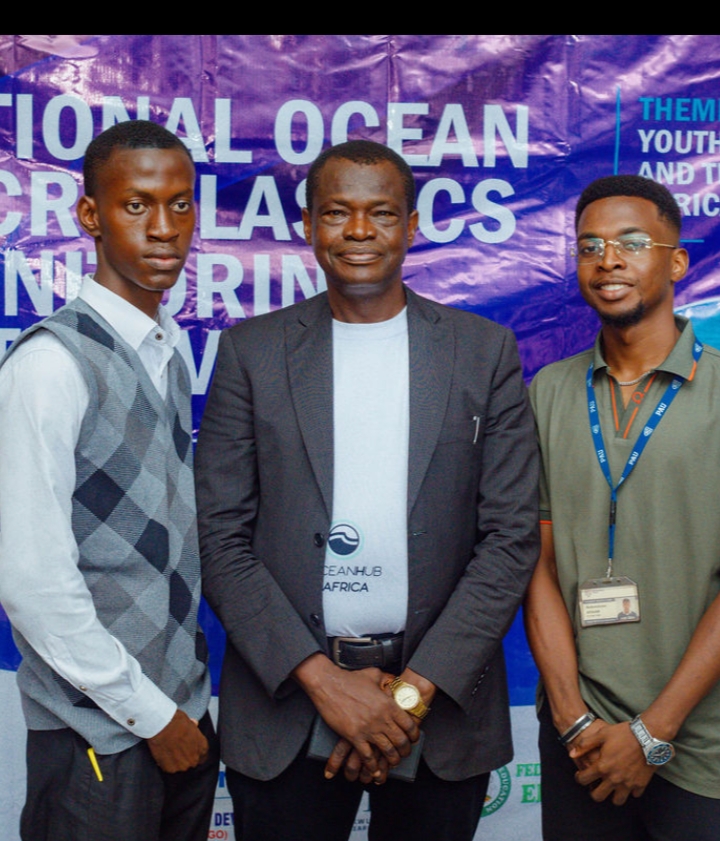

• As Amb Emmanuel Ejiogu of YOD raises alarm over troubled oceans
By Ignatius Chukwu
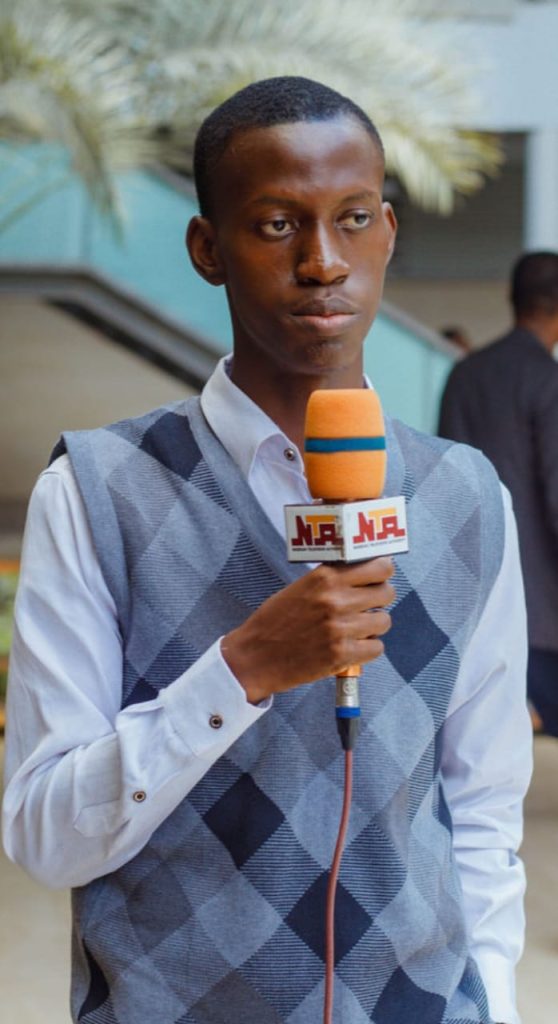
A 19-year-old Nigerian researcher, Chukwuleta Isaac Chukwuemeka, has warned that micro and nano plastics harm in Africa is sure to be twice the global size.
The researcher who has set up an organisation known as Re-Cycleme Solutions, is leading youths of Africa to join in the war against harms from the ocean and other water bodies, the most threatening being micro-plastics and nano-plastics.
The group is doing this with an NGOs known as YOD-UNESCO which have teamed forces to begin the war.
Re-Cycleme Solutions has launched the National Ocean Microplastics Monitoring Initiative (NOMMI) through a multi-stakeholder collaboration.
The scheme is called the Living Green Club of Pan-Atlantic University, Anchor University Lagos, Caleb-British International Secondary School Lekki, OceanHUB Africa, Ocean Diagnostics and Fedrok AG.
The Launch ceremony with the Re-Cycleme Solutions CEO enlightened 60 participants, students, faculty, teachers etc. on what Microplastics were, the effects of microplastics on public health, coastal ecosystems and economic activities.
The CEO highlighted that if according to western research, humans consumed about 550-880 microplastics a day, that the data and seeming effect in Africa would be double.
Micro and nano plastics are said to easily penetrate fishes and other seafoods to increase health risks; these are said to have added to the threat to oceans.
According to Amb Emmanuel Ejiogu, president of the Youth Orientation for Development (YOD), a non-governmental organization (NGO) working in Nigeria with the United Nations Educational, Scientific, and Cultural Organisation (UNESCO), the ocean has huge assets.
He said despite the assets, the ocean ecosystems are facing increasing pressure from pollution, unmanaged waste, rising temperatures, habitat destruction, and the growing presence of plastics and micro-plastics within marine environments.
Amb Ejiogu spoke when Re-Cycleme Solutions, a youth-led climate tech startup unveiled its activities. The organisation solves the problem of plastic pollution in Africa through (Technology, Research and Youth-led Climate Activism).
They launched the National Ocean Microplastics Monitoring Initiative (NOMMI) through a multi-stakeholder collaboration with YOD UNESCO.
Amb Ejiogu said one of the major environmental realities confronting Africa today is that while these problems continue to grow, the systems required to properly monitor, understand, and respond to them remained limited across many parts of the continent.
Speaking on the theme: “Youth, Science and the Future of Africa’s Ocean”, he said Africa’s oceans and coastal ecosystems were among the continent’s most valuable environmental and economic assets. “They support fisheries, transportation, tourism, biodiversity, climate regulation, and the livelihoods of millions of people across coastal communities.”
The ambassador said environmental science, particularly within areas such as marine research, ocean monitoring, and environmental data collection, is still developing within many African institutions and communities.
He said this is why the role of young people is becoming increasingly important.
He made it clear that Africa possesses one of the youngest populations in the world. “Within this generation exists enormous potential for scientific innovation, environmental leadership, technological development, and sustainability-driven problem solving.
“Across universities, secondary schools, innovation hubs, and grassroots communities, young Africans are showing increasing interest in climate science, environmental sustainability, artificial intelligence, robotics, renewable systems, and data-driven innovation.”
However, he added, interest alone is not enough. “The future of Africa’s ocean depends on creating practical systems that allow young people to actively participate in environmental science and solution-building.
“Science must move beyond theory and become something young Africans experience directly through research, field activities, environmental observation, data collection, innovation programmes, and scientific collaboration.”
When young people are given opportunities to participate in real scientific processes, he added, they begin to see themselves not simply as students, but as contributors to national and continental development.
“This is why initiatives such as the National Ocean Microplastics Monitoring Initiative (NOMMI) are significant. Through practical field sampling, environmental monitoring, scientific documentation, and public engagement, young people are being introduced to the realities affecting Africa’s marine ecosystems while also developing the skills required to respond to them.”
The long-term importance of this approach, he explained, extends beyond environmental awareness alone. “It contributes to building localized environmental intelligence systems capable of generating African data for African realities. It also creates opportunities for future innovation in areas such as pollution monitoring technologies, AI-assisted environmental systems, waste recovery infrastructure, water quality intelligence, and scalable sustainability solutions designed specifically for African coastal conditions.”
Ejiogu said the future of Africa’s ocean will not only be determined by governments or international institutions. “It will also be shaped by whether this generation of Africans chooses to build the scientific culture, environmental systems, and innovation capacity necessary to protect and sustain our ecosystems for decades to come.
“If Africa is to solve its environmental challenges effectively, then African youth must become active participants in research, monitoring, innovation, and policy conversations surrounding sustainability and ocean protection.”
Ultimately, he stated, the future of Africa’s ocean must be researched by Africans, monitored by Africans, and protected by Africans.