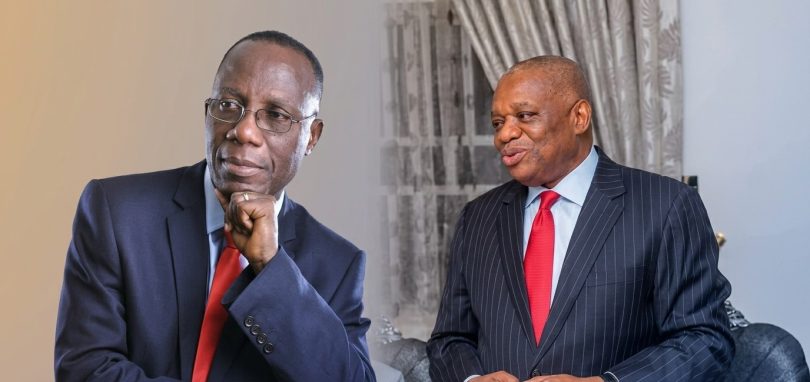

Some jubilate, others frown
By Ignatius Chukwu
Ogoni is always a thorny issue in the flesh of the FG. Now, the in the area in Rivers State seems to get more confusing. It is not clear whether the Ogonis are getting closer or farther away from oil resumption, creation of Bori State for them, or an agreement with the Federal Government on issues listed when they met FG authorities in Abuja months back.
Many seem happy, however, that their protests have yielded fruits.
Many also think descent into anarchy gets more real, and danger signals of 1993 which led to over 2000 deaths in Ogoni and hanging of Ken Saro Wiwa and eight others after the mob killing of four Ogoni elders.
It is always caused by disagreement on how best to face the energy (in this case, always the FG and an oil company). It usually grows into two major camps of opinions that end in fierce opposition and threats of elimination. It also leads to removal of prominent leaders who get replaced by more radical and younger leaders.
Some voices in Ogoni including those of Solomon Lenu and Blessing Nwikina think that new developments are positive and that things would now be done more properly, pointing to creation of harmonization committee to be headed by Sen Olaka Wogu.
Now, a strong voice from old has been heard from the last president of the united Movement for the Survival of the Ogoni People (MOSOP), in the person of Dr Legborsi Saro Pyagbara. Since his exit, MOSOP has been divided and has been having two presidents at a time. It was Saro Wiwa to Ledum Mitee to Pyagbara, after which it has two presidents per time.
Now, Pyagbara has come out to accuse the FG of allegedly priming Ogoni for crisis by the way it was going about the dialogue and oil resumption. He believes that FG was the same entity undermining the Ogoni Dialogue Committee (ODC) process. He has joined to warn that the handling could lead to another crisis in Ogoni. He has addressed the press on this.
He expressed concerns over what he described as the government’s lack of sincerity, transparency, nor commitment to the dialogue.
He said although the Ogoni people had embraced the dialogue as a peaceful means of addressing longstanding grievances, the Federal Government appeared to have placed oil resumption ahead of the fundamental issues of injustice that gave rise to the Ogoni struggle.
According to him, the Dialogue Process risks becoming a mere decoy for oil resumption if the government fails to address the concerns raised by the Ogoni people. This seems to be the widely spreading belief in Ogoni, a thing that usually ignites violence.
Many fear that it could lead to incitements that could make those sympathetic to the FG side to be seen as enemies of Ogoni while those opposing the FG would be termed true sons of Ogoni. If it is allowed to get to this level, most moderate voices may be silenced.
Pyagbara said one of the major indicators of the government’s alleged lack of commitment was the failure to fully implement agreed confidence-building measures almost two years after the first meeting of the process in January 2025.
He listed the measures to include the establishment and adequate funding of the Federal University of Environment and Technology, employment of Ogoni sons and daughters in the Nigerian National Petroleum Company (NNPC), rehabilitation of the East-West Road, renovation and construction of schools and health facilities, state creation and establishment of an industrial park.
The former MOSOP president did what most other Ogoni critics have done: they commended President Bola Tinubu and some other principal officers of the FG but hack at their kinsmen representing them, believing that the problem was from home.
On employment into the NNPCL, Pyagbara questioned the conflicting information surrounding the recruitment of Ogoni youths under the Dialogue Process.
He recalled that the NNPC had initially indicated that 40 Ogoni persons would be employed, but said information later emerged that only 20 would be recruited directly by the company while others would be distributed among other agencies under the petroleum sector.
Pyagbara challenged the NNPC to publish, within seven days, the names of all Ogoni persons employed through the process, including their communities and dates of employment.
He also criticised the implementation of projects in the education and health sectors, saying that several schools and health facilities identified by the Ogoni Dialogue Committee for intervention were yet to receive the expected attention.
On the East-West Road, he described the Onne Junction-Eleme Junction section as strategically important to the economy of the country and expressed concern over what he described as inter-agency rivalry between the Federal Ministry of Works and the NNPC.
Pyagbara further faulted the government over other issues including the industrial park, the reported award of the Yorla South field in Ogoni under Petroleum Prospecting License 2A32 within OML 11, arguing that oil-related activities should not proceed while the dialogue process was ongoing.
According to him, the government’s alleged re-entry into parts of Ogoni for oil activities without resolving outstanding issues could undermine confidence in the peace process.
All critics of the dialogue process said there was no transparency. He said the process was not being supported by the FG. He alleged that members of the Dialogue Committee were often left to fund meetings held in Ogoni themselves.
ODC takes the matter to the FG at last:
The Ogoni Dialogue Committee (ODC) led by Don Baridam, a renowned emeritus professor, in a report he presented to the National Security Adviser (NSA), admitted that Ogoni has for decades, endured conflict, environmental devastation, economic exclusion, and missed development opportunities, saying the present dialogue offered his people a window to climb back.
He showed the progress so far and how two committees were set up: the technical committee and the tactical committee. He said: “We commend the progress recorded in the renovation and improvement of selected health facilities in Ogoniland, the employment of qualified Ogoni sons and daughters by NNPCL, and the establishment of the Federal University of Environmental Technology.”
He admitted that Federal Government funding remained a major challenge to the smooth operation of the University.
“We are concerned that no remarkable progress has been made on the proposed Ogoni Industrial Park. We are also worried by reports that construction work on the East-West Road has slowed because of funding challenges. We respectfully request the NSA’s intervention in facilitating renewed attention to these critical projects, as visible progress is necessary to sustain public confidence in the process.”
Clarification on Recent Allegations:
Sir, despite our efforts, the leadership of the ODC and its facilitators have recently been targeted by numerous unfounded allegations.
He recast the allegations against his committee such as claims of a lack of transparency, the alleged receipt and non-disclosure of a Federal Government budget, non-disclosure of contract beneficiaries for confidence-building projects, and the alleged preferential allocation of NNPCL employment opportunities.
He however denied these, saying: “We wish to state clearly that the ODC and its facilitators did not recruit or determine the beneficiaries of the 40 NNPCL employment opportunities for Ogoni people. NNPCL made it clear that it would not compromise its established recruitment standards and drew directly from its database of qualified Ogoni applicants who had previously applied and underwent its recruitment processes.
“While some members of the committee submitted names for consideration, the recruitment and selection process did not pass through the ODC. The suggestion that the committee or its facilitators distributed employment opportunities as patronage is therefore false.”
He also denied any hands in award of contracts, any budget for the committee, and pleaded that public discourse on matters affecting the future of Ogoni must be guided by verifiable facts. “We believe these actions are intended to undermine the dialogue process and damage the hard-earned reputations of the Chairman and other facilitators, built through decades of service to the Ogoni people and the nation.”
The ODC boss joined in showing total unawareness over the heating issue of return of oil activities in Ogoni, an issue that is driven more by rumours than facts in the face of total silence of the FG; the NNPCL merely denied knowledge of activity but did not deny activity. He requested the NSA to immediately investigate the alleged oil-rig activities in Alesa-Eleme.
“A prompt and credible investigation will establish the facts, reassure affected communities, and ensure that the matter does not negatively affect or derail the ongoing dialogue.”
Baridam pleaded with the NSA to publicly address and clarify the unfounded allegations against them to safeguard their integrity and mitigate the threats arising from the allegations. He also asked that all FG agencies should begin to implement the promises so far made to the Ogoni.
The professor said the ODC remained firmly committed to a peaceful, transparent, inclusive, and mutually beneficial resolution of all outstanding issues.
“We trust in the NSA’s continued wisdom, leadership, and intervention to protect the integrity of this process and guide it to a successful conclusion.”
In the face of such a strong presentation, statements began filtering out that the ODC chairman has been replaced by Olaka Wogu, a senator, but clarification came that Baridam is still on seat. It was gathered that Wogu is heading the newly created harmonization committee. Perhaps, this would dilute the powers of the ODC chairman, reason why there is some jubilation in some quarters.
The source claimed it was due to rising protests in the communities and the statement by KAGOTE, a powerful group in Ogoni, against the ODC.
Sources supporting the change said the protests brought interventions that brought critical questions into the public domain over who speaks for Ogoniland, who determines the position of the people and whether the wider Ogoni population was being sufficiently consulted on issues concerning oil resumption, development projects, employment and other opportunities.
“KAGOTE’s position was particularly significant because it challenged the perception that decisions concerning the future of Ogoniland could be concluded at the level of representatives without adequately consulting the people they were mandated to represent”, the source stated.
The sources urged the alleged new ODC chairman to ensure that the new phase of the dialogue was substantially different from the process that produced the current controversy. “Major decisions should be communicated to the people, subjected to wider consultation and, where necessary, taken back to the appropriate Ogoni structures for consideration before commitments are made.
“The distribution of projects should also receive particular attention. Development interventions arising from the dialogue should be equitably distributed across Khana, Gokana, Tai and Eleme and across the six traditional districts of Ogoniland, using clear and defensible criteria.
“No local government or district should be left with the impression that it is being excluded from the benefits of an agreement negotiated in the name of the entire Ogoni people.
“Employment and scholarship opportunities should equally be administered transparently. Qualified Ogoni youths should be allowed to compete under clearly stated criteria, with the most qualified candidates selected rather than opportunities being determined through opaque nomination arrangements.
“Contractors handling projects should also be publicly identified, alongside relevant information about the projects they are executing. Such disclosure would enable the people to understand who is responsible for each project and provide a basis for monitoring implementation.”
It is not clear if any dialoguer would meet these demands, or that the new head would not be accused too.
A source has however urged the people to disregard rumours that Baridam has been replaced. These conflicting statements are actually what cause deep divisions in Ogoni that lead to violence.
As Pyagbara demanded, the FG should come clean on the Ogoni matter and issue clear statements on the issues under contention to save those leading the dialogue process. The harmonization system should be able to reduce opaqueness of the dialogue process.
Above all, as already suggested by some experts, a process of expressing grievances in the Ogoni matter should be made clear within the people because open process may breed an ill wind that would fetch no man any good.