
By Ignatius Chukwu
Many felt that Gov Sim Fubara merely accompanied Alhaji Kashim Shettima, the Vice President, to the United Nations General Assembly in New York on a jamboree. Now, details have emerged to show the strategic execution of investment plans.
Details:
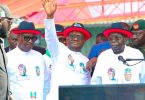
First, Kashim Shettima, Nigeria’s vice president, visited Rivers State on project commissioning, perhaps the highest ranking FG official to come close to Gov Sim Fubara since he assumed office in 2023. Little wonder a surprised governor exclaimed saying: “We thought Nigeria has abandoned us”.
Many wondered if this meant a new federal window to Rivers State like it was in the days of Dr Peter Odili and at a point in the days of Rt Hon Chibuike Rotimi Amaechi, all before Rivers and the FG became antagonistic entities, on account of personal disagreements.
Next, Gov Fubara was on a sensitive delegation to the 81st session of the United Nations General Assembly simply known as UNGA-81. More eyes thus popped up, wondering if it was for good or bad. Some said the governor was just there to make up the numbers, some said he was not reckoned with in the Presidency, few others insisted that he had no role to play in New York because only the VP would speak. Some knowledgeable others however argued that every General Assembly of the UN was more than a political or diplomatic assembly but also the biggest world economic summit, thus, the many economic and investment opportunities that would be for the taking. It was also said to be the reason many reasonable countries go with full retinue of their business and investment gurus or strategists to engage with teams from other nations.
It was thus said that going to the UNGA prepared is better than a tour of all the countries of the world which could take over four years.
Soon, Gov Fubara was seen in the UN talking to the world and pushing the Port Harcourt agenda; peace, investment, hydrocarbon, the Orange Economy (Tourism), etc.
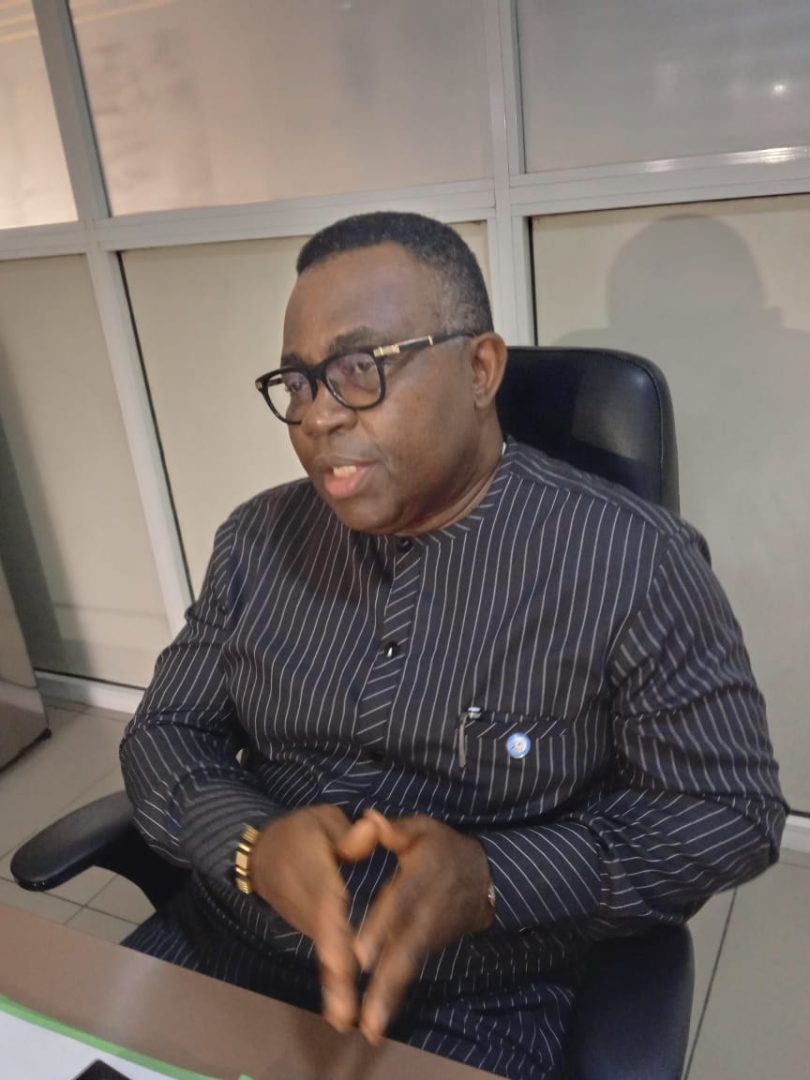
It was thus on this score that when the team returned, newsmen went to the head of the state’s investment team, Dr Chamberlain Peterside, the Director-General of the Rivers State Investment Promotion Agency (RSIPA) who was once the state’s Commissioner for Finance (plus Economic Planning), who was also once a member of the Rivers State Economic Advisory Committee, to find out what actually transpired in New York concerning Gov Fubara and Rivers State investment wise.
Dr Peterside opens up:
I attended the United Nations General Assembly 81 (UNGA-81), which is an annual event that takes place in New York, on the third week of September. But most importantly, it’s a gathering of heads of states who are given a chance to address the world on their agenda, on their philosophy, on their policy focus, and on any other issues that are critically important to them; around geopolitics, around national, political, geographical, and social issues.
What the sidelines means to investors:
On the sidelines of the General Assembly, there are usually a host of activities, several activities that are also very, very important, especially activities that relate to the private sector. You might call it activities where the global private sector meets with the global public sector. There are always and usually such events, and that’s what takes me there.
Even though I serve in a government, but I serve in a subnational government, which is Rivers State. And of course, the Nigerian delegation was led and headed by the Vice President (Kashim Shettima). But most importantly, our own governor here, Governor Siminalayi Fubara, was also on the delegation of Nigeria. So, it was quite an important outing both for Nigeria and for Rivers State.
The GABI and the UNGC:
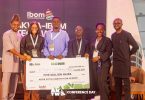
And so, for instance, on my own side, as the head of the investment agency (RSIPA), I attended what we call the Global Africa Business Initiative (GABI), which is a gathering and an initiative that is created under the United Nations Global Compact (UNGC). The Global Compact is a meeting of minds between the United Nations, national governments, and the global private sector.
Nigeria’s Amina Mohammed showed brilliance:
And as you do know, Nigeria’s Amina Mohammed is the UN Deputy Secretary-General, and she’s a very vocal advocate of Africa; very brilliant with many ideas. And so it was her initiative to launch what they call ‘Unstoppable Africa Conference’ (UAC).
This forum is under the Global Africa Business Initiative (GABI), which all fall under the Global Compact. It is usually an annual event that brings together businesses and political leaders and policymakers to discuss topical issues around Africa, around business, around investments, around policies, and around growth strategies. And in this year’s event, we had, of course, our main person, who is Aliko Dangote. He had a panel, one-on-one fireside chat. And of course, we also had other leaders, like the panels that included the founder of Flutterwave, that we know is a Nigerian.
Send your best brains, Ngozi Okonjo-Iweala begs Africa:
We also had Ngozi Okonjo-Iweala speaking about Africa and the World Trade Organisation (WTO)—what policies or strategies that Africa should be pursuing and how they should be making their case with the WTO so that they can gain better trade advantage.
One point she made was that Africa should be able to get smart people. She said it: ‘Send your smartest people to represent you in the global arena for trade negotiations, and for interactions with your counterparts from around the world. Send your smartest people, whether they are policymakers, whether they are heads of agencies. Send your good brains.’
And that was something that I truly took away. And aside from sending your smart people, let them be visible. Let them not be intimidated, let them stand their ground, let them understand the lingo, know what is being discussed, and how Africa can position itself.
But on a final note, some one of the takeaways that I believe we achieved are two things. First, Rivers State was in the spotlight, and the Governor participated both in the General Assembly (he was prominently there on the front seat when the Vice President addressed the General Assembly.)
Secondly, he participated in the Nigeria Business and Investment Summit (NBIS), which was held in the Nigerian House. He also attended the Nigerian town hall meeting. And in all of this, he had a one-on-one with journalists, with correspondents, and the general media where he spoke about Rivers State. So, Rivers State was in the limelight.
Fubara spoke as a Champion of Business:
He spoke about the favorable climate that we have tried to engender. He spoke as a champion of business and investments in the state, how despite everything else, the state has remained peaceful, the state had continued to attract as much as possible investments to improve its operating climate. And of course, with the formation of the Rivers State Investment Promotion Agency (RSIPA), it is one practical and concrete step that he had taken to focus all the investment proposals, all the efforts by investors towards getting into the state to one location that they can come, discuss, and have their issues addressed so that the ease of business can be enhanced.
Africa must move to processing:
So, I think these are the major takeaways. But on a final note, Africa, in general, was also on the agenda, with discussions around processing natural resources, moving away from exporting raw resources. If you see the value chain of any product, whether it’s solid minerals, agricultural produce, or even crude oil, you see that Africa earns less than 5% of the global proceeds from any product value chain.
It depends on what you look at. In some spheres and some industries, we earn like 1% and 2%. In some other areas, we earn more. So, if you take an average natural resource and process it, of course you make a lot of multiple gains if you added value. And as you add value to that product, there’s a lot of accretion in the aggregate sum that you get.
So, if you take cocoa beans, for instance, if you export cocoa beans, you process into cocoa cake, process into products. Finished products that you get from cocoa beans is worth far higher than the natural resource.
Again, there were discussions around solid minerals, all the minerals and rare mineral (including rare earth minerals) that are very critical to the advent of the information technology: the AI, the electric vehicles, electric batteries. All those products are in Africa.
Good news: Africa is waking up:
So, the good news is Africans are waking up and discussing how they can maximize income potentials by attracting investments to process those products. And I was very, very pleased.
We have a flyer on a very important session that I attended headed by the President of Botswana, Duma Boko, who is the chief advocate for this kind of philosophy, this kind of concept of processing your natural resources as much as possible within the continent. Of course, he is. A strong advocate of that also is Aliko Dangote, who had built a massive refinery and expanding to East Africa. So, we’re going to see more and more of that.
Africa must do beneficiation:
Beneficiation is about adding value to mineral ore through processing and polishing, but in economic terms, it is now used as a concept to seek and create maximum benefits in every activity of product or project or programme.
So, to me, when I think back, I say, ‘Wow, this year’s summit was very productive.’ It was a change in thinking and philosophy that Africa must trade more with itself, process more of its natural resources, do what they call beneficiation where you add value to products, and not just exporting them in their raw form.
And as you do that, you retain the jobs in the continent, you hire and create opportunities for young professionals, the youth, to be employed in value-added manufacturing, processing, and beneficiation, rather than exporting those raw materials and then the youths and the young citizens and population now drift abroad chasing those jobs in the factories that are processing and manufacturing products with our raw materials.
So, those are some of what we achieved. It was an exciting time, I believe.
How did Rivers gain from UNGA-81?
Many have asked how the knowledge that has been acquired by those of us that went to UNGA-81, if there is any way this can be cascaded down, whether through a town hall in Rivers State. Many also wonder if there is any way this thinking can be moved to next administration so the philosophy would not have to die with this administration.
On this, I say, yes. The truth is, that concept of processing of natural resources actually relates and applies to Rivers State a lot. So, for instance, in our traditional sector (oil/gas) where we have a comparative advantage, we have always led in the production of gas. Rivers State accounts for about 40% of the gas reserves in the country. But 25 or so years ago, Nigeria invested with the international oil corporations (IOCs) in the NLNG. And NLNG is a typical example of processing natural resources. So, natural gas is processed into LPG, CNG, and LNG for export. But that is an intermediary product.
It is from this natural gas that you can now produce a lot more. So, Indorama, for instance, is much higher in the value chain. They produce polyethylene, they produce fertilizer, and methanol, and so on and so forth. Those are derivatives that you can get from gas.
And as we speak, in Rivers State, there’s the push to encourage and attract factories and investments for adding value in gas in the natural format it is.
Already, for instance, we have a memorandum of Understanding (MOU) to be signed between an investor group and the communities that are host to the location where a methanol and a fertilizer plant will be sited in Rivers State.
Those are the kinds of investments that we will increasingly be paying attention on. From gas, of course, you know you can generate power, and from power, you can do a lot: manufacturing, processing, drive and power information technology. There’s so much discussion around electric vehicles, but you need power to charge up the electric vehicle batteries and then move them.
So, if we don’t have enough power, then how do you make a push into the new technology and the new products? So, those are discussions that are going on.
Nature of proposals flooding Rivers State:
And I’m happy to say that a lot of the proposals and the discussions that we’re having are around adding value. So, if you take the blue economy, for instance: fisheries. It is best if we have the power, that if you fish, you process the fish, you add some value, you create cold rooms where you can process the fish, store them, etc, even for export.
Of course, we’re not there yet. So, we are still at the stage of you catch the fish, you go to the nearest market or you go to any of the riverine communities and you buy them, and you come and slaughter them.
We’re still importing packaged fish products from abroad; that shouldn’t be the case. I don’t think there’s any single factory in Nigeria that packages and processes fish or seafood. They’re all exported in raw form. Now, Africa says this must stop. Rivers State is taking this charge seriously.