
By Ignatius Chukwu & Blessing Ita
There is no possibility of earthquake in the oil region, a geoscientist has declared, backed by decades of study. There is also no possibility of submerging of areas.
This is the declaration by a geoscientist and seismologist, Prof Chibuogwu L. Eze, an Applied Geophysics of the Institute of Geosciences and Environmental Management of the Rivers State University (RSU- formerly University of Science and Technology, UST).
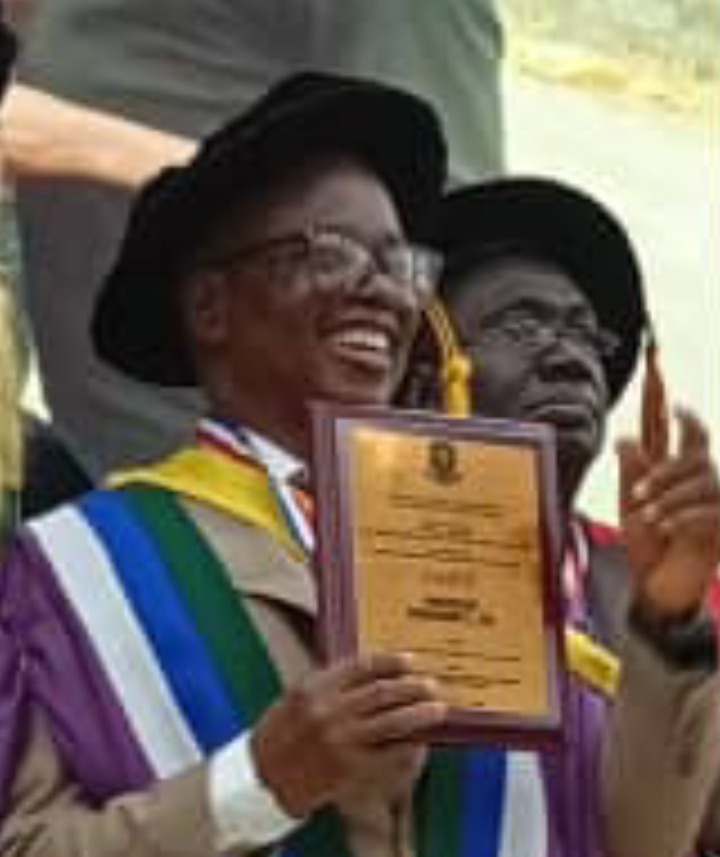
Prof Eze made the declaration in his inaugural lecture, the 143rd in the university, titled ‘Seismic Waves: The Oil Finders and Nigeria’s Messengers of Wealth’.
Details as published in BD:
He spoke after delivering his inaugural lecture and wondered where those pushing this threat message got their study from. He said it is true that exploration is going on in the Niger Delta and people are talking about the possibility of earthquake in the region.
He said: “There is no possibility of earthquake because of our exploration. A lot of people have written scientific papers to say there is, but I am a seismologist. There is not. When you detonate a dynamite, which is what is used in the Niger Delta, it cannot cause an earthquake. But what it can cause is crack on the wall of your house.
“If they did not give the distance, but there is a law saying do not go as close as this to the house. If they keep that law, no problem. But I did a research to say this distance should be different for us in the Niger Delta. This is because the house systems of those who made that law may not be as strong as our own. That is all I said.”
He went further: “There is also this issue, contention that the possibility of submerging, some part of Niger Delta submerging because of oil exploration.
“This is from the same thinking like earthquake. I tell you gas is on top, followed by oil, followed by water. As you begin to take out the gas or the oil, the water comes naturally to feed the place. Before subsidence will take place, it means there is nothing occupying the pore spaces. But I believe for now. And I think I am thinking right. The spaces have been filled by water. Please do not entertain that fear.”
On Nigeria’s image due to oil, he agreed it is bad. “That is why I say the seismic waves that go down to find it, they are going on strike. And I work sending them down. I am a seismologist, I work in oil exploration, sending these waves. That is why I say I will form a political party, seismic waves party. “
Responding to oil injustice, the professor said there may be oil all over Nigeria, but if the one in the Niger Delta dries up, would there still be unity to enjoy the one from other regions. “The map of Nigeria shows where we are currently having exploration and areas for potential exploration. Oil is possible in all the basins of Nigeria. Currently, we are exploiting from the Niger Delta basin.
Way out:
It was with this view that Eze recommended careful and frugal spending of oil resources because according to his findings, it takes up to 100m years for new oil to form, which he said is about 30 million generations.
“What will our children find? What I am saying is as we exploit it knowing the intricacies, let us use it judiciously and in a sustainable manner. Not just to squander it in the name of national cake. That is dangerous.”
Eze traced stages of oil from formation to exploitation in the lecture that brought to the fore, the intricate natural endowments that have placed Nigeria as an oil producing nation.
“Every community located on any of the sedimentary basin of Nigeria has the potential of being an oil producing community. But exploration must be first carried out. This lecture has clearly demonstrated the sequence of oil exploration in the simplest terms.
“The technical and environmental implications of the different seismic energy sources have been highlighted. Dynamite is a very good explosive seismic energy source but the environmental and safety implications in the Niger Delta need serious monitoring and mitigation. Sledgehammer-plate system, though a cheap seismic energy source, is often used without adequate consideration of the physical parameters that affect the signal output.
“The processing of seismic data is necessary for signal enhancement and accuracy in interpretation. Exploration for oil is actually exploration for oil traps. Some of the rigs that come to our communities to drill exploratory wells come to investigate the content of a trap identified in a seismic section. This may or may not produce oil. Seismic exploration is the birth and bedrock of oil resources exploitation.”
Eze the oil hunter:
Eze started his academic journey in Enugu-Ezike in 1966, which was interrupted by the Nigeria Civil War in 1967. He got accelerated promotion after the war and later proceeded to Igbo-Eze Secondary School, Enugu Ezike in the present Enugu State. In 1977, he obtained West African School Certificate with grade one.
Eze obtained a B.Sc. in Geology in 1982 from the University of Calabar, Cross River State, and obtained a Master’s Degree in Applied Geophysics from the University of Nigeria, Nsukka in 1985.
In 1987 he joined Rockview Nigeria Limited, a solid mineral exploration company based in Jos, Plateau State. During his career in Rockview, he explored for solid mineral and water in many parts of northern Nigeria including one year spent in Sokoto State. In the course of his professional practice Eze has been to 35 of the present 36 states.
In 1992 he joined Western Geophysical Company, an American oil exploration company based in Port Harcourt, as a Quality Control Seismologist. During his career in Western Geophysical, he participated in the exploration of many of the producing oil blocks in Nigeria today.
After he had gained so much experience in the field, he decided to join the world of academics. He joined the then UST RSU and later obtained a Ph.D. in Applied Geophysics from the same university. He progressed to the rank of a Professor in Applied Geophysics in 2018.
Eze has supervised over 20 PhD students, over 20 Bsc and 30 Masters work and served as an external examiner to many universities and has assessed.
Hunting the oil finders:
Seismology and application to man seems to be a huge branch of study. Thus, Eze began the lecture by saying: “I am a geologist. That means my profession involves studying the earth. Studying the earth is so important that man started studying the earth before studying himself, hence geology predates sociology and psychology by several decades as a formal modern discipline.
“My specialization in geology is applied geophysics. A geophysicist is a scientist who studies the Earth’s physical properties using gravity, magnetism, seismic waves, and electrical fields using physics-based instruments and data analysis to understand what lies beneath the surface without digging.
“Each study of the physical property of the earth forms a specialization in geophysics. I study the earth using seismic waves. I am a seismologist.”
The paper took him to oil formation processes such as oil formation and accumulation which he said precede the sending of the seismic messengers (seismic waves) to find the oil. “Today, it is believed that petroleum is derived from ancient living microorganisms, such as plankton and algae, which escaped full oxidation upon death and accumulated at the bottoms of ancient lakes or seas, along with sand, clay, salts, and other material. Three phases are involved in the evolution of organic matter to petroleum as follows: Diagenesis, Catagenesis, and Metagenesis.
He lectured thus: “Diagenesis occurs in the shallow subsurface and begins during initial deposition and burial. Biogenic decay aided by bacteria and non-biogenic reactions are the principal processes at work producing primarily methane (CH4), carbon dioxide (CO2), water (H2O), kerogen, a precursor to the creation of the petroleum.
He explained Metagenesis as the third phase is, saying the metagenesis phase involves even higher temperature and pressure verging on metamorphism. “The only hydrocarbon that is released during this phase is methane. The hydrogen-to-carbon ratio (H:C) declines until the residue remaining is comprised mostly of C (carbon).
Actual oil finders:
On the history of oil exploration in Nigeria, Eze said seismic waves are the actual oil finders and the message they bring back (oil) is the wealth of Nigeria.
The history of oil exploration, the sources of the seismic waves, the wave characteristics and how they travel kilometers down the earth to find the oil was the message of his lecture.
“The advent of the oil industry can be traced back to 1908, when a German entity, the Nigerian Bitumen Corporation, commenced exploration activities in the Araromi area, western part of Nigeria. These pioneering efforts ended abruptly with the outbreak of the First World War in 1914.
“Oil prospecting efforts resumed in 1937, when Shell D’Arcy (the forerunner of Shell Petroleum Development Company of Nigeria) was awarded the sole concessionary rights covering the whole territory of Nigeria. Their activities were also interrupted by the Second World War, but resumed 1947.
“Concerted efforts after several years and an investment of over N30 million, led to the first commercial discovery in 1956 at Oloibiri in the Niger Delta.
Finding commercial quantity not easy:
The professor said finding commercially valuable accumulation of oil is not simple. “Oil reservoirs are at several thousand metres below earth’s surface in stratigraphic or structural traps. When we search for oil and gas, we are actually searching for these traps and is the most important tool in mapping these traps and is the most straightforward type of interpretation to carry out.
“The seismic method utilizes the propagation of seismic waves through the earth especially reflection seismology. During seismic exploration, seismic energy sources are used to generate the seismic waves.”
He said seismic energy sources include anything that can vibrate the earth to produce seismic waves. Earthquake has the best attribute in this regard but we are interested in controlled sources.
He went on to say the choice of energy source is important since it controls the character of the refractions or reflections recorded. It is desirable to have a source which transfers a sudden, almost instantaneous, energy pulse into the earth and that contains a wide range of frequencies.
Role of dynamites:
Eze said: “Dynamite is an explosive made of nitroglycerin, sorbents (such as powdered shells or clay), and stabilizers. The word “dynamite” derives from the Greek word “dynamis” meaning power and strength.
The use of dynamite as a seismic energy source especially in the Niger Delta Region has extensively reviewed by Eze in other books.
“A unit explosive charge offers much higher energy but expensive and the frequency than a surface source. Dynamite was the original seismic energy source for both land and marine. It is efficient but expensive and dangerous. Detonation generates a rapid gas expansion and the temperature and pressure may reach as high as 4000°C and demonstrated the sequence.
“The technical and environmental implications of the different seismic energy sources have been highlighted.
Dynamite is a very good explosive seismic energy source but the environmental and safety implications in the Niger Delta needs serious monitoring and mitigation.
“Sledgehammer-plate system, though a cheap seismic energy source, is often used without adequate consideration of the physical parameters that affect the signal output. The processing of seismic data is necessary for signal enhancement and accuracy in interpretation.
“Exploration for oil is actually exploration for oil traps. Some of the rigs that come to our communities to drill exploratory wells come to investigate the content of a trap identified in a seismic section. This may or may not produce oil. Seismic exploration is the birth and bedrock of oil resources exploitation.”
Conclusion:
By the discoveries and presentation of Prof Eze, the great seismic professor, those spending oil money must be as frugal as the oil finders because of the intricate processes and the 100m years needed for next oil to form.