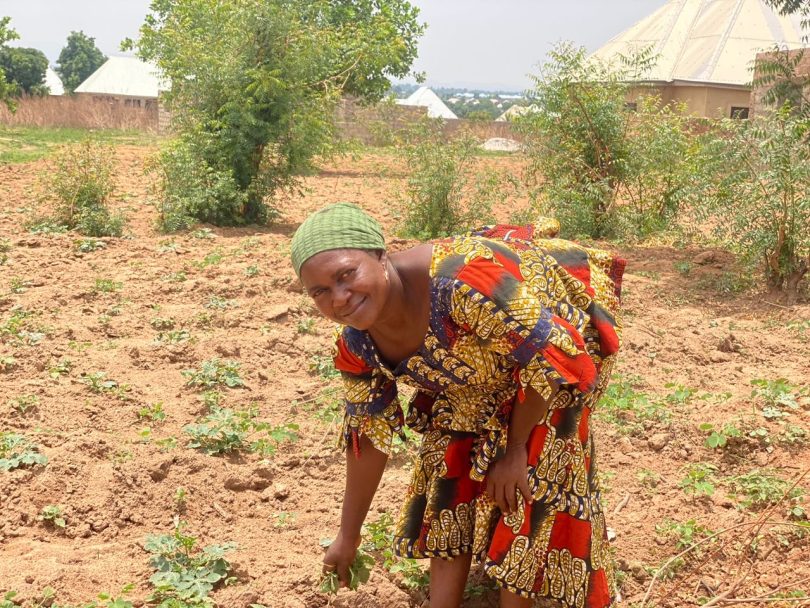

A Non-Governmental Organisation, Ziva Community Initiative, has urged women in mining and agriculture sector in Nasarawa State to establish cooperatives to enable them to secure grants and soft loans aimed at boosting their productivity.
Mr Samuel Pam, Programme Lead of the organisation, made the call at a two-day media training on “Reporting Women’s Involvement in Sustainable Agriculture, Lithium Mining and Energy Transition,” on Friday in Lafia.
Pam explained that establishing cooperatives as registered entities would strengthen women’s voices in communicating the challenges they face in the sector to policymakers and support their advocacy for inclusive policies.
He said that through cooperatives, illegal miners have been able to regularise their activities and were now identified as artisanal miners.
“Before now, they were called illegal miners, but with advocacy from different organisations, including which Ziva Community Initiative, the narrative has changed, hence the new identity as artisanal small-scale miners.
“We have been able to identify these women within different communities and brought them together to form a cooperative, and this serves as a platform they can use to access different grants and lobby for inclusive policies.
“We facilitated several such opportunities where we trained and linked them up to different micro credit entities.
“They were able to get soft loans and grants that helped them acquire most of their mining and farming tools,” he said.
Pam said that the media training was designed to build journalists’ capacity to leverage their platforms to amplify women’s voices in mining and agriculture and to advocate for a shift to clean energy.
Also, Ms Patience Ogbode, the NGO’s Project Lead for Increasing Renewable Energy Investment for the Empowerment of Women Sustainable Agriculture and Lithium Mining (IREEWAM), said the training was geared towards projecting the voices of women .
She said that the group had trained more than 100 women in Nasarawa on sustainable mining and agriculture practices to build their resilience amid climate change.
“This training is specifically organised for journalists to use their space and influence to help amplify the voices of women in agriculture and mining, especially lithium mining.
“They are also expected through their reports, to influence policies that will lead to an increase in public investments in renewable energy for women in agriculture and mining, specifically lithium mining.
“Women are often left behind, So we want to see how we can advocate for their involvement and influence policies to ensure that they participate fully in the transition to more sustainable energy sources,” she said.
Qosim Suleiman, a facilitator at the training, emphasised the use of investigative journalism to report on the barriers affecting women in mining, agriculture, and energy transition, as well as their success stories.
Another facilitator, Shekwonyadu Iyakwari, a Professor of Geology, harped on the need for responsible and sustainable mining and agricultural practices.
He urged the government to enforce reclamation plans on mining companies.
The News Agency of Nigeria (NAN) reports that the training is a continuation of the IREEWAM project in West Africa with support from the Africa Centre for Energy Policy (ACEP). (NAN)
$$