

By Jeremy Godson
Prominent environmental and gender rights activist, Chief Constance Meju, has accused major oil companies of failing to properly clean up oil spill sites across the Niger Delta despite decades of environmental devastation in the oil-producing region.
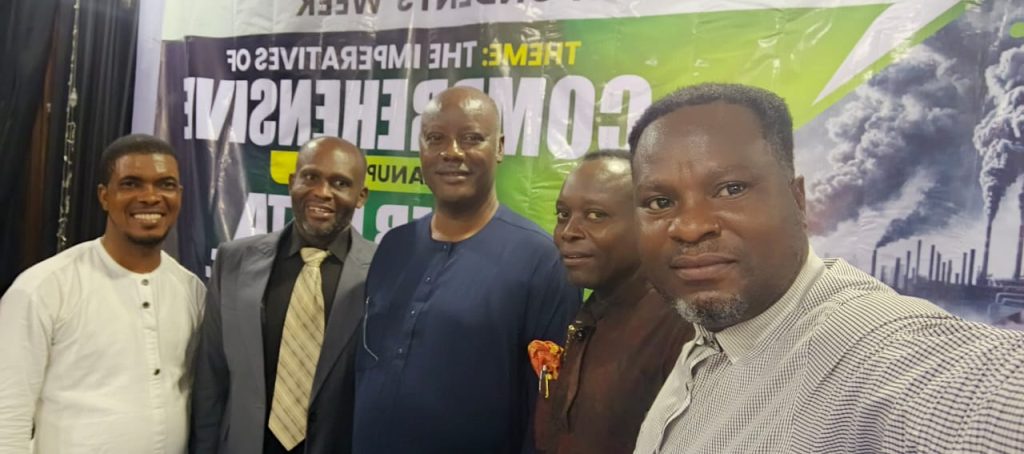
Meju made this known during the Correspondents’ Week Dinner organised by the Correspondents’ Chapel of the Nigeria Union of Journalists in Port Harcourt, with support from NLNG, Renaissance Africa Energy Company and Kebetkache Women Development Centre.
According to her, environmental remediation efforts in the Niger Delta remain largely superficial, leaving polluted communities exposed to contaminated land, rivers and seafood.
“In the Niger Delta, there is no oil spill site that Shell has cleaned properly,” she declared.
Meju who is also the chairperson of CEHRD contrasted Nigeria’s oil spill response system with environmental enforcement practices in the United States, where she said authorities compel operators to meet higher remediation standards.
“When oil spill occurred in the US, after the site was cleaned up, President Obama visited the site and was dissatisfied. He told the operator to go back and clean the place,” she said.
“But here in the Niger Delta, oil spill sites are shabbily cleaned and most of them not cleaned at all.”
The activist warned that the consequences of prolonged pollution have become deeply embedded in the daily lives of residents, particularly through contaminated seafood consumed across the region.
“If you eat fresh fish in this state, I want to tell you that you’re eating oil,” she said.
“If you eat shrimps and other seafoods, you have been eating crude oil.”
She added that residents who regularly consume fish from polluted waters can already detect changes in taste and quality compared to earlier decades before intensive oil exploration.
Meju also linked worsening unemployment and dependency among young people in the Niger Delta to the collapse of traditional livelihoods caused by environmental degradation.
“In the time past, as kids when we need money, we used to go and fish,” she recalled.
“But since the devastation, our youths are no longer working. There’s an entitlement.”
She said fishing and farming once provided survival opportunities for rural families before pollution destroyed rivers, mangroves and farmlands.
“For them to work, the land has to be clean,” she added.
Meju challenged journalists to intensify pressure on multinational oil companies and government agencies, insisting that the media remains one of the strongest forces capable of driving accountability.
“This is the best position to do the necessary advocacy,” she said.
“Anybody that is the most powerful in this country, he respects journalists. He fears journalists.”
She urged reporters to sustain investigative reporting and public advocacy around environmental justice in the Niger Delta.
“That is the power that we have,” she added.
National Vice President of the Nigeria Union of Journalists, Mr. Opaka Dokubo, warned that political distractions would continue to overshadow environmental remediation unless journalists deliberately sustain focus on the crisis.
“If we don’t set the agenda for urgent environmental remediation of the Niger Delta, the politicians will continue to do what they are doing,” he said.
He urged the Correspondents’ Chapel to organise more symposiums and seminars focused on environmental accountability and restoration.
Publisher of Asiwaju Trumpet Magazine, Mr. Abdul-Hameed Oladipupo Alli, also urged journalists to become more directly involved in governance and politics.
“Journalists are better administrators, we can run this country better than politicians,” he said.
“We understand the issues better, therefore journalists must take part in active politics to move the country forward.”
Rivers State NUJ Secretary, Dr. Ijeoma Tubosia, emphasized that environmental reporting must remain a priority for the media.
“Environment is life,” she said.
“We must continue to set the agenda because as journalists, we are the agenda setters.”
The 2026 Correspondents’ Week ended with renewed calls for stronger environmental enforcement, comprehensive cleanup of polluted communities and sustained media pressure on oil companies operating in the Niger Delta.
$$