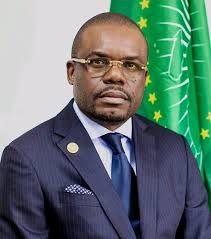

The Africa Centres for Disease Control and Prevention (Africa CDC) has warned that funding shortfalls, insecurity, and multiple disease outbreaks were straining health response efforts across the continent.
Dr Jean Kaseya, Director-General, Africa CDC, disclosed this on Thursday, January 30, 2025, during the Mpox weekly briefing.
The World Health Organisation (WHO) declared Mpox a global public health emergency in August 2024, for the second time in two years.
This is following the spread of a new variant of the viral infection from the Democratic Republic of the Congo to neighbouring countries.
Kaseya highlighted the impact of a recent 90-day pause on U.S. foreign assistance, compounding ongoing challenges in the Democratic Republic of Congo (DRC), where conflict in Goma had escalated alongside suspected Ebola cases, Mpox, and cholera outbreaks.
“This week started with an open war in Goma. This week also started with suspected Ebola cases in DRC and ongoing Mpox and cholera outbreaks.
“It’s one of the weeks we don’t like at Africa CDC because in addition to that, we have a humanitarian crisis.
“But it’s also why we exist—to show our member states and our populations that we will do everything possible to support them,” the D-G stated.
He said that the Africa CDC confirmed that while the U.S. pledged 1.1 billion dollars for health support, only 60 per cent of the committed Mpox funding had been received, leaving a significant 40 per cent gap.
He said that the agency welcomed an exemption granted for continued financial support but emphasised the urgent need for Africa to reduce its dependence on foreign assistance.
“We are entering a new era where we will see a definite decrease in foreign assistance to Africa. It means we, as Africans, must take ownership of our health systems.
“That includes strengthening local manufacturing and digitizing healthcare systems,” the D-G said.
To address sustainable health financing, he disclosed that Africa CDC would be convening a high-level meeting in Addis Ababa on Feb. 14, called by President Paul Kagame, where African Heads of States would discuss strategies to mobilise domestic resources for healthcare.
He disclosed that the ongoing crisis in DRC had severely impacted disease surveillance and response.
“Conflict in Goma has disrupted health infrastructure, including the destruction of a key laboratory, making it difficult to track and contain outbreaks.
“When we talk about disease surveillance, we talk about human resources, communities, and health workers on the frontlines.
“But if these people cannot operate due to security threats, how can we ensure effective surveillance?” the D-G asked.
He also acknowledged that the Africa CDC did not yet have all the answers regarding vaccine distribution to Goma, mortality and morbidity projections, or the full extent of the Ebola outbreak in DRC and Uganda but assured that the agency remained committed to providing timely updates.
The D-G emphasised that Africa CDC was committed to transparency in its operations, ensuring clear communication about challenges and progress.
“This is the change we are bringing to Africa—better communication, more transparency, and a stronger push for domestic resource mobilisation,” he said.
In spite facing significant challenges, he said that Africa CDC remained focused on strengthening Africa’s health systems, improving surveillance, and ensuring sustainable funding.
NAN reports that the upcoming Feb. 14 meeting in Addis Ababa is expected to set the stage for a new era of African-led health financing and policy reforms. (NAN)
$$