
MAKING IBAKA DEEP SEAPORT IN MBO LOCAL GOVERNMENT, AKWA IBOM STATE, THE UNITED NATIONS MODEL FOR TRANSHIPMENT HUB, SHIPYARD DEVELOPMENT AND MARINE AND BLUE ECONOMY IN WEST AFRICA
ATTENTION: GOVERNOR UMO ENO
IBAKA DEEP SEAPORT: FROM VERBOSITY TO ACTION
A Must Read By All Akwa Ibom Active Thinking Citizens, Indigenes And Non Indigenes
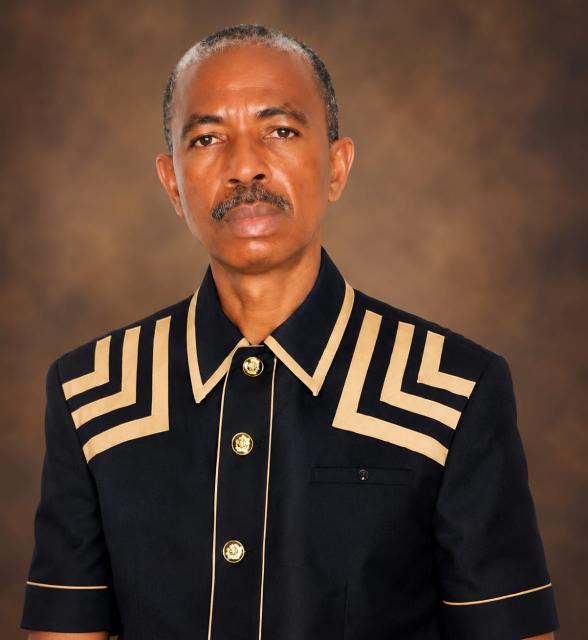
By Prince Andy Usanga
Start up Founder and coordinator, Nigerian Maritime Development Conference (NIMADEC)
President, Maritime Trade Development Circle Initiative of Nigeria.
The Ibaka Deep Seaport project does not deserve high verbosity and continued grammatical gyration. It deserves action. Government grammar has been spinning, Ibaka, Ibaka, Ibaka, but the project is yet to take off. For more than two decades, we have spoken, we have promised, we have approved and re-approved, and yet the sea at Ibaka remains quiet while other states are building and other nations are prospering. The time has come to speak less and to build more.
President Bola Ahmed Tinubu was in Akwa Ibom State on his routine presidential visit on the 6th of November, 2026. The event, which should have brought joy to the people, ended up bringing the reverse. This was because of the question and request put to the President by His Excellency, Governor Umo Eno, on the status of Ibaka Deep Seaport, which the President answered in the affirmative that Ibaka Deep Seaport is approved, without any finance approval.
To many who understand the history of Ibaka Deep Seaport, the Governor’s question was unnecessary and at the wrong time. It made Ibaka Deep Seaport to become once again an object of continued politicization, considering the many recent approvals. Many now see the Governor as not having done his due diligence on the project.
Upon assumption of office, if His Excellency was intentional on port development, he ought to have consulted with Obong Victor Attah, the pioneer initiator of the project, on what modalities to adopt to move the project forward. The same history applies to Governor Godswill Akpabio, who nevertheless moved the project further. From the Outline Business Case of April 2013, which costed the project at two billion dollars ($2billion), Governor Akpabio got the National Assembly to appropriate funds through the Nigerian Ports Authority. By his instrumentality, the Senate Committee on Marine Transport visited Oron as host community and performed groundbreaking at Ibaka Bay. Thereafter, the project concept moved to Federal approval, securing of due diligence, Outline Business Case and Federal buy-in, with the project cost estimate moved from two billion dollars to four point two billion dollars.
Does a project at that level still need new and repeated approvals? These are many and more questions begging for answers. That is why the appeal to President Tinubu by a sitting Governor is not necessary. What approval again? The word approval in the context of Ibaka Deep Seaport is no longer definitive. The 2020 approval by President Muhammadu Buhari was not necessary, as there was an original subsisting approval.
Akwa Ibom people deserve to know the truth about the reasons for the non-take off of this great project, which is viewed as the major economic backbone of the state, and the reason for repeated approvals. There is need to understand the controversy of change of name from Ibaka Deep Seaport to IBOM DEEPSEA PORT and what it has caused the state based on the tension and ethnic polarization as a result of change of location.
Ibaka Deep Seaport project seems to present Akwa Ibom people as captives of intellectual slavery and investment aversion. How do I mean? There is no argument raised that is based on technicalities. In maritime development, there are two sides. There is the technical side and the management side, or supply side economics. At the level that Ibaka is, it is about technical. It does appear that government is lacking a functional and knowledgeable technical team for advice on maritime construction or offshore engineering construction.
One of the major sectors that can spin out industries that meet the interest of the United Nations is the maritime sector development and other related ancillary projects. That is what Akwa Ibom State needs presently. Industries that meet United Nations Industrial Development standards for developing economies.
This is because most of the projects initiated, executed and commissioned, like the coconut industry and the syringe industry, lack global standards according to UNCTAD and cannot attract Foreign Direct Investment. The United Nations does not fund projects that are merely political without intent for sustainability. It only supports projects that are Sustainable Development Goals compliant, environmentally and socially safeguarded, economically viable and bankable, and technically feasible under global industrial standards, like Ibaka Deep Seaport and other ancillaries.
What is the implication to Akwa Ibom State? The State Government must be intentional, with a lesson from Lekki Deep Seaport project development. The State must see the need for application of systemic mutual concurrence approach on how Lekki Deep Seaport project was modeled, how Ogun was able to fast track Ogun Deep Seaport project with quick approval through Governor Dapo Abiodun, a maritime lawyer, and how Ibaka Deep Seaport can be achieved through active thinking principle to reach immediate transformation for Ibaka. That is policy to action, based on the application of transformation or transitory necessities as necessary preconditions for take off of Ibaka Deep Seaport project after two decades of delay because of unnecessary politicization of the project.
Lekki was not built by Federal money. Lekki was built by a Special Purpose Vehicle, Lekki Port LFTZ Enterprise, on a Build, Own, Operate and Transfer basis for forty five years. The private investor held seventy five percent (75%), Lagos State held twenty percent (20%) through land as equity, and the Federal Government through the Nigerian Ports Authority held five percent (5%). China Harbour Engineering Company brought equity of about two hundred and twenty one million dollars ($221m), became the builder, and China Development Bank provided a loan of six hundred and twenty nine million dollars ($629m). Once the investor, the builder and the lender were in one ecosystem, Lekki was completed in twenty seven months. Ogun has now applied the same principle with DP World of Dubai for its Gateway Deep Sea Port and Blue Marine Special Economic Zone, with over seven billion dollars in private investment. Akwa Ibom must apply the same knowledge, the same idea and the same directive to Ibaka.
On the history of Ibaka, the unnecessary politicization, and the fitting location, we must look at comparative analysis of Lekki, Ogun and Ibaka Deep Seaport from the mainstream Gulf of Guinea Maritime Trade Corridor. From Ibaka, the time lap for ship manoeuvring from the anchorage to the main Gulf of Guinea trade epicentre is the shortest, because Ibaka sits almost directly on the deep water channel. Ships coming from Europe, Asia and the Americas do not need to navigate long, shallow and winding channels as they do in other locations. That means less fuel, less waiting time, less insurance cost, and faster turnaround. That is why Ibaka is naturally positioned to be the transshipment hub for West and Central Africa.
The benefits from trade to Akwa Ibom State are enormous. A working Ibaka Deep Seaport will create direct and indirect employment for thousands of youths in Akwa Ibom State. It will create jobs in port operations, logistics, customs, clearing and forwarding, warehousing, trucking, marine services, and hospitality. It will create jobs in ancillary industries, especially fabrication industries for ship building, ship parts replacement and ship repair, the way it is done in the United States of America, in South Korea, and in Singapore. A shipyard at Ibaka will mean that vessels operating in the Gulf of Guinea will no longer need to go to Dubai or Europe for repair. They will come to Ibaka.
Ibaka Deep Seaport, complemented by railway lines to Aba, Onitsha and Port Harcourt, alongside the Lagos to Calabar Coastal Highway project, can decongest Europe by effecting and influencing relocation of maritime and allied industries to Akwa Ibom State. When industries see deep water, cheap power, a free trade zone, and a direct rail link to the South East market of over thirty million people, they will relocate. That is how Singapore grew. That is how Jebel Ali grew. That is how Lekki is growing. Ibaka can do the same, and even better, because of its natural depth.
We must emphasize that time is now to overcome all forms of politicization and get Ibaka Deep Seaport project to take off, as this will put Akwa Ibom State on the global map as a maritime hub, which is long overdue.
As we prepare for Ibaka Deep Seaport project take off, we must also prepare the necessary human elements for job positioning. I make a call for Akwa Ibom State youths to embrace maritime education and professionalism through maritime related professional courses and training to qualify them for maritime on-board and hands-on technical certifications.
This is the practice of Indians and Filipinos. They constitute the highest percentage of on-board officers and seafarers globally, operating with unlimited license, which is lacking in Nigeria. The upscaling of Akwa Ibom State youths in knowledge of maritime certification will place them on first right of offer for employment as on-board officers on ships globally through the Ibaka Deep Seaport project exposure. A port without trained seafarers is like a university without lecturers. We must train our children now, so that when the ships come, our children will be on board.
Your Excellency, I have the blueprint that can drive the take off of Ibaka Deep Seaport project in the next twelve months, with ready project finance. I want you to see this as a request to meet you one on one for further discussion on details. So, Your Excellency, I am requesting for urgent audience with you in this regard.
The sea is waiting. The world is waiting. Akwa Ibom is waiting. Let us move from verbosity to action, and from approval to construction.
For urgent audience, please contact:
Call: 07019947883
Whatsapp: 08037719522
Email: goldbridgetech24@gmail.com