
By Ignatius Chukwu
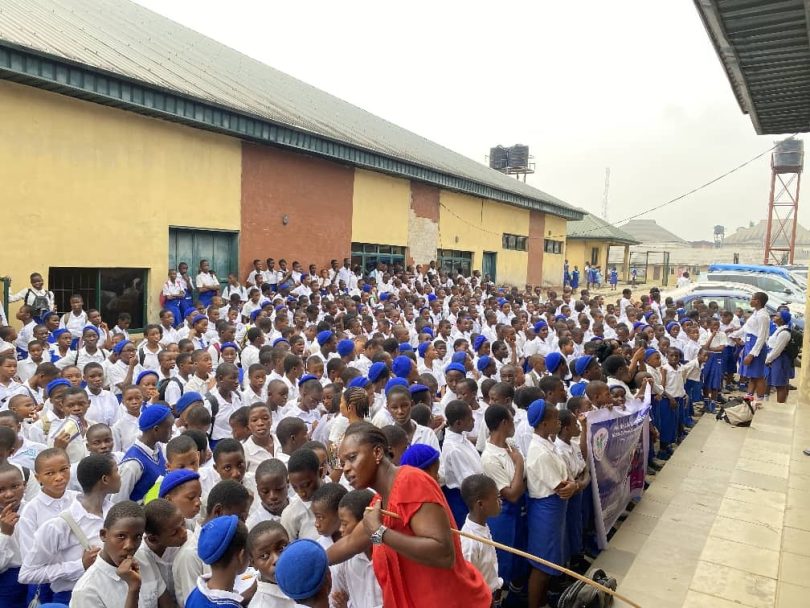
The commemoration of the 2026 edition of the International Women’s Day (IWD) took a huge difference in Rivers State. This is because the global event on March 8, 2026, was turned into a massive sensitization programme on March 10, 2026, for awareness through sensitization exercise at Akpajo at State Primary School (Junior and Senior) and Community Secondary School (Junior and Senior), in Eleme Local Government Area of Rivers State, Nigeria.
According to a statement by the executive coordinator of HELDi, Dr Mfon Utin, the choice of schools was to ensure that students and people from Akpajo and surrounding communities gained knowledge on critical issues affecting young people.
Particular focus was on ‘Sexual and Gender-Based Violence (SGBV)’, personal safety, mental health, and reporting mechanisms. “The engagement aimed at empowering students with knowledge that would help them protect themselves, make informed decisions, and contribute to creating safer school and community environments.”
She said the sensitization sessions were facilitated by experienced professionals who she said addressed several important topics relevant to the wellbeing and development of adolescents and young people.
She stated: “The session on ‘Knowing Your Rights as a Girl Child’, ‘Substance Abuse’, and ‘Peer Pressure’ was facilitated by Mercy Eze, who highlighted the importance of understanding and protecting the rights of girls.
She was said to have educated students on how peer pressure could influence negative behaviours such as substance abuse. She encouraged them to develop the confidence to make positive decisions, choose healthy friendships, and resist harmful influences. “She also emphasized self-respect, goal setting, and the importance of education in shaping a better future.”
The session on ‘Menstrual Hygiene’, ‘Body Confidence’, ‘Gender-Based Violence’, and ‘Reporting’ was anchored by Dr. Utin (Coordinator of HELDi), and supported by Gift Saro Meelubari.
During the session, the facilitators educated the students on proper personal and menstrual hygiene practices, including the importance of bathing regularly, maintaining cleanliness, and changing sanitary pads at least every six hours to prevent infections. “The facilitators also addressed issues of body confidence, helping students understand and appreciate their bodies while discouraging body shaming and bullying.
“The discussion further focused on identifying different forms of abuse including inappropriate touching, harassment, bullying, and other forms of violence. The facilitators emphasized that touching someone’s body without consent, intimidation, and harassment are forms of abuse.”
Dr Utin said students were encouraged to speak up, seek help, and report any form of violence or abuse whenever they or others experienced it. “They were also informed about trusted adults, the Eleme SGBV Response Team, and other appropriate reporting channels.
“The session on ‘Teenage Pregnancy, Emotional Healing, and Mental Health’ was facilitated by Mrs. Wokoma Mbreba, the former Ministry of Health Adolescent Desk Officer and currently the Family Planning Coordinator in Rivers State.
“She spoke extensively on the risks and consequences of teenage pregnancy and other forms of abuse, explaining how they can interrupt education, limit future opportunities, and lead to emotional and psychological challenges.
“She also discussed the importance of self-control, responsible decision-making, and focusing on personal development.
“Mrs. Wokoma further addressed mental health issues such as stress, anxiety, and depression, encouraging students to seek support, speak to trusted adults, and develop positive coping mechanisms.”
According to the HELDi founder, the session on ‘Digital Safety and Social Media Awareness’ was facilitated by Kelechi Uzoma, who she said educated the students on the responsible use of social media and digital platforms. “She explained how online spaces can expose young people to risks such as cyberbullying, online exploitation, harassment, and the sharing of inappropriate content.
“She provided practical safety tips, including protecting personal information online, avoiding interactions with strangers, thinking carefully before sharing content, and to report early any suspicious or abusive online activities. She also encouraged students to use digital platforms positively for learning, personal growth, and constructive communication.”
The executive coordinator said the sessions were highly interactive, engaging, and impactful, as students actively participated, asked questions, and shared their experiences. “Many students in the senior secondary session showed particular interest in learning about menstrual cycles, reproductive health, and social media safety, and their questions were addressed in a clear and supportive manner. It was also encouraging to observe that male students actively participated, answered questions, and contributed meaningfully to discussions on menstrual hygiene and respect for girls.”
She said students who correctly answered questions during the sessions were rewarded with mathematical sets, which further motivated participation, made them excited, and made the learning environment lively and engaging.
According to her, although the initial plan was to engage only female students, the enthusiasm and interest shown by male students prompted their teachers to request that they also be included in the sessions.
“After a brief discussion with the HELDi team, the Coordinator, Dr. Utin, approved their participation. As a compromise, exercise books were distributed to the girls while pens were given to the boys, ensuring that all participants felt included and encouraged.
“The initial focus on girls was due to the large student population reported during the planning process. The Junior Secondary School alone reported an estimated population of about 1,500 students, with 700 girls, while the Senior Secondary School reported over 2,400 students, with approximately 1,000 girls.
“Originally, HELDi had planned to engage only the Senior Secondary School students, but upon the request of the junior secondary school teachers and some members of the school management, the programme was expanded to include both junior and senior secondary school sessions.”
Similarly, she added, the primary school section was not part of the initial plan. “However, the Headmaster and Headmistress strongly requested during our engagement with the secondary school students that the pupils also benefit from the sensitization. According to them, the schools had about 385 pupils.
Overall, the HELDi team was able to engage with about 4,000 students and pupils across the various school sections.
Exercise books were said to have been distributed to all female students in both the junior and senior secondary schools, as well as senior male students in SS1 and SS2, while pens were distributed to other students, including pupils in the primary school section, to support their learning.
“All students and pupils present on the day of the activity received a gift as the items were distributed while they returned to their classrooms.
“Due to the time required to assemble all the primary school pupils and in order to allow them return quickly to their classroom activities, the HELDI Coordinator engaged selected pupils from both the junior and senior primary sections. The pupils were educated on basic values such as respect, obedience, supporting one another, speaking up, and reporting abuse whenever it occurs. “The pupils were very excited, and both students and teachers expressed appreciation and interest in more educational engagements in the future.
“Because of the very large population of secondary school students, it was not possible to take attendance. Additionally, the team had limited time as the students were preparing for their examinations and needed to return to their classes.
HELDi initially planned to engage only girls and had prepared 1,700 educational materials for the secondary school section, which created some limitations in attendance documentation. Despite the large crowd, the sessions were conducted effectively with the support of a sound system, allowing students to clearly hear and actively participate in the discussions.
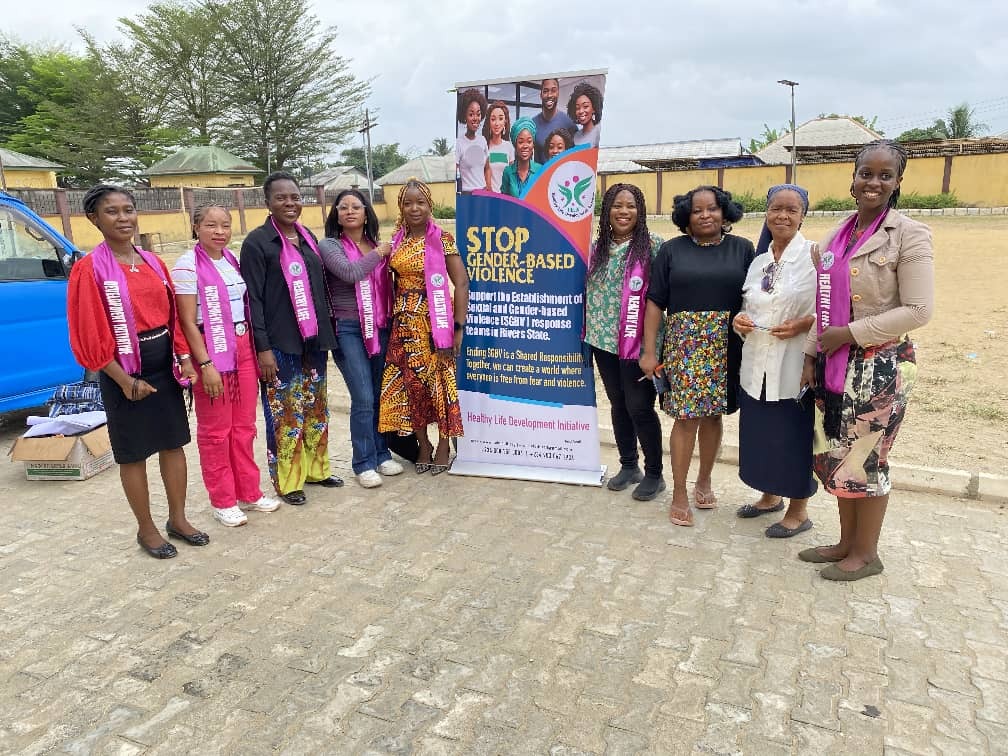
Dr Utin said: “HELDi sincerely appreciates the students for their attentive listening, active participation, and courage to ask questions, as well as the members of the SGBV Response Team in Eleme LGA, the teachers, school management, facilitators, media representatives, the HELDi team, and most especially our sponsor who made the program possible and helped put smiles on the faces of these young learners.
“The inclusion of members of the SGBV Response Team from Eleme LGA was intentional, as it provided an opportunity to introduce them to the students and teachers, thereby strengthening community ownership, awareness, accessibility of support systems, and reporting channels for SGBV. Interestingly, one of the response team members, Dr. Patience Osaroejiji, mentioned that she had never known about the school before the visit, highlighting the importance of such engagements in strengthening local connections, increasing awareness of available services, and improving collaboration between schools and community support systems.
“Overall, the programme was highly impactful and a significant step in empowering young people with knowledge, confidence, and awareness. It reaffirmed the importance of educating children and adolescents early and equipping them with the information and tools they need to protect themselves and make positive life choices.”
Indeed, she said, knowledge was shared, empowerment was gained, and everyone left inspired, encouraged, and hopeful for a safer and healthier future.
$$