
By Ignatius Chukwu
A high court judge from Owerri, Imo State, Justice K.O Ojiako, who is also of the Chartered Institute of Arbitration, has outlined ways to make Fiscal Responsibility Act a bigger success.
He said the Civil Society Organisations (CSOs) must be supported to pursue public interest litigations.
He also said Fiscal Responsibility involves making informed decisions about government spending, taxation and borrowing to ensure that public resources are used effectively and efficiently.
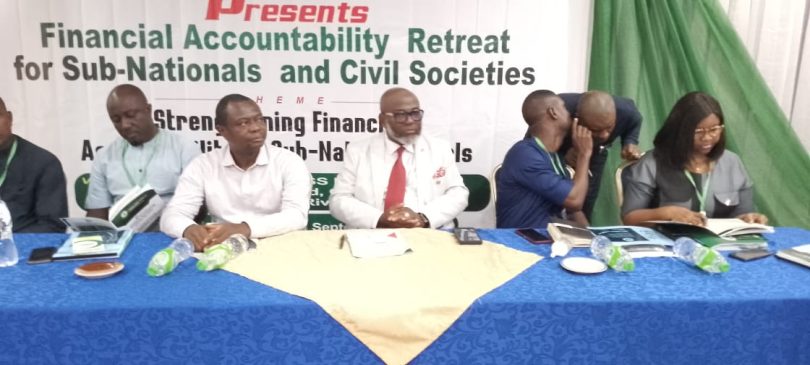
He spoke as lead presenter at a zonal meeting of the Fiscal Responsibility Commission (FRC) in Port Harcourt which opened on Monday, September 2, 2024.
The judge demanded that public interest litigation should be encouraged, saying the courts have over the years expanded the scope of locus standi in public interest litigation.
“I think that where the cause is laudable and will bring peace, justice and orderliness that will reflect the spirit of the constitution, then we should not shirk our responsibility in this area.”
The judge mentioned challenges to public interest litigations as limited resources, political interference, lack of capacity, and limited access to information.
He, among other suggestions, urged subnational governments to provide adequate funding to CSOs working on fiscal governance. He also demanded that the legal framework should be strengthened to protect the independence and activities of CSOs.
In his welcome speech, the chairman, Victor Muruako, insisted that state government must open their books fully and embrace transparency because about 50% of the nation’s monthly allocation goes to other tiers of government than the Federal Government.
Muruako said the FG retains only about half of every naira that Nigeria earns every month.
The rest, he said, goes to states and LGAs, meaning that those other tiers of government must open their books for the citizens to follow. He said the non-governmental organisations (NGOs) have a duty in this direction.
He said the conference series in the zones are to emphasize the importance of subnational governments adopting best practices in fiscal responsibility, we need only look at the Revenue Allocation Formula. He said the fact that the FG takes only half of the revenue underscores the critical role of subnational governments in ensuring the success of Nigeria’s macroeconomic management.”
He said the publication of budgets, budget implementation reports, and audited financial statements is a significant step towards transparency. However, we can and must do more.
“We encourage state governments and their agencies to continue striving for probity, accountability, prudence, and revenue generation. Financial accountability is a cornerstone of transparency and responsible management of public funds.”
He said Section 51 of the Fiscal Responsibility Act empowers every citizen with the legal capacity to enforce the provisions of the Act through the courts.”
He went on: “We also urge state governments to view CSOs as partners in progress and collaborate with them. State governments that have not yet domesticated the Fiscal Responsibility Act are encouraged to take steps to do so.”
On loans taken by states and its impact on the sovereignty of Nigeria, he said: “Every loan contracted by a state government contributes to the overall national debt stock. Given the substantial fiscal risks associated with subnational debts, we urge state governments to prioritize improving their fiscal hygiene.”
$$