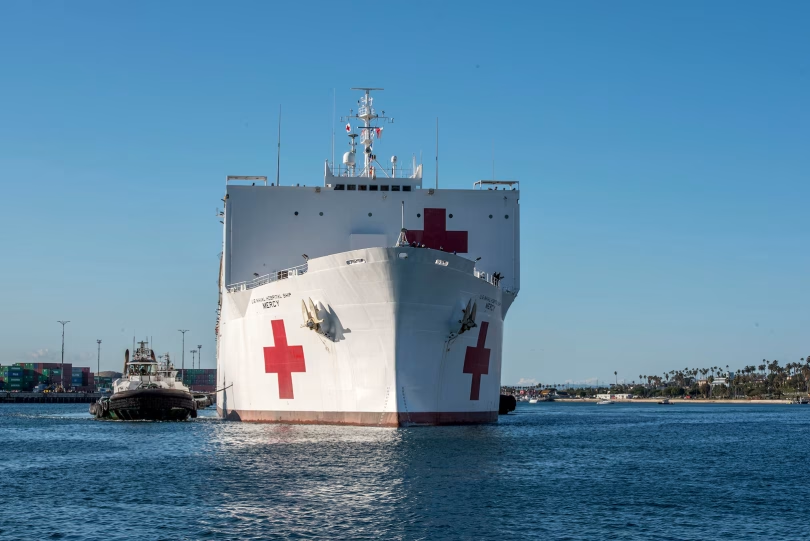

The seven years old Nigerian Navy Reference Hospital in Calabar says no fewer than 50,000 patients are attended to annually by the hospital.
The commander of the hospital, Capt. Simon Ocholi made the disclosure in Calabar on Monday during a medical rhapsody to commemorate the 69 years anniversary of the Nigerian Navy.
Ocholi said that within the last one year, no fewer than 55,614 patients were treated by the hospital which was inaugurated in 2018 by the President Muhammadu Buhari led administration.
He however said that the major challenge faced by the 150-bed sitter hospital was electricity.
“In spite of the seeming challenges, the Eastern Naval Command (ENC) of the Nigerian Navy will continue to use medical rhapsody as a tool to maintain cordial relationship with the host community,” he said.
Earlier, Rear Admiral Saheed Akinwande, Flag Officer Commanding (FOC) of the ENC, while declaring the 69th anniversary medical rhapsody opened, said that a strong civil-military relationship was needed to enhance security across the country.
Akinwande represented by the Chief of Staff, Rear Admiral Danjuma Ndanusa, said that provisons have been made for no fewer than 2000 patients to be treated free-of-charge as part of the 69th anniversary.
According to him, the Nigerian Navy week is an annual event celebrated between May 23 and June 7, every year.
“It is customary that during the Navy week, Naval Medical facilities conduct outreach programmes to communities within their immediate environment to commemorate the anniversary.
“Another objective of this exercise is to fulfill corporate social responsibility of the Nigerian Navy.
“Medical outreaches play a crucial role in improving public health, particularly in remote communities. They bring healthcare services to areas where they are otherwise unavailable or insufficient.
“They also provide preventive services such as vaccinations, screening, and health education.
“Furthermore, medical outreaches afford the opportunity of early detection and treatment of illnesses. This helps to build the trust of the communities in national healthcare systems.”
The FOC added that medical outreaches were vital in bridging the gap in healthcare access, promoting public health, and building a robust health system.
Some of the beneficiaries of the medical outreach described it as “life-saving and noble”.
According to them, it afforded some of them the opportunity to get tested and treated for treatment they ordinarily could not afford in hospitals.
Mrs Comfort Essien, one of the beneficiaries appreciated the initiative.
Similarly, Mr Bassey Bassey appealed that the gesture should not be a one-off thing. (NAN)
$$