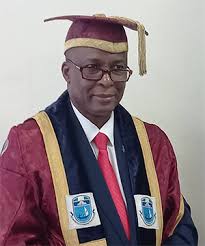

By Favour M. Eleazu
When the history of the University of Port Harcourt is written, the tenure of Professor Abraham Georgewill Owunari will be remembered as a season of peace, accessibility, and steady progress.
In a country where many universities are often troubled by strikes, insecurity, and strained relations between students and management, UNIPORT under Professor Owunari became something of an exception. His years in office were defined not only by administrative decisions, but by a leadership style that made the university community feel seen, heard, and cared for.
From the start, the Vice-Chancellor placed emphasis on peace and security. Students recall that during his tenure, the campus felt safe and stable.
Tensions that had once flared were eased through dialogue and proactive measures, and for much of his term, the institution enjoyed harmony.
Perhaps, what most distinguished Prof Owunari was his personal presence.
Unlike many leaders who remain behind office walls, he was often seen walking through hostels both male and female checking conditions and ensuring students’ welfare.
He visited faculties and departments regularly, not only during official inspections but also when invited for programmes, lectures, or celebrations.
His presence at such occasions was never casual: it was a deliberate gesture to show love and solidarity with students and staff alike.
Even in spaces of spiritual and social gathering at the university chaplaincies and student centers, his attention was evident.
Staff and students recall him as a Vice-Chancellor who did not merely govern from above, but who lived among his community, showing genuine concern for their well-being.
These qualities of care and visibility became even more striking when milestone events fell within his tenure.
During his leadership, the University of Port Harcourt celebrated its 50th Anniversary (Golden Jubilee) a landmark moment that looked back on five decades of growth.
He also presided over the 35th Convocation Ceremony, an occasion that produced thousands of graduates and reaffirmed the institution’s role as a training ground for Nigeria’s future. That both events were celebrated peacefully and successfully is a testimony to the stable climate his administration nurtured.
To many within the university, these years felt different. What was once absent became present: peace where there had been tension, security where there had been fear, and a sense of family where there had once been distance. Students and staff alike knew they had a Vice-Chancellor who paid attention not just to policies and budgets, but to people and their daily realities.
Now, as Prof Owunari concludes his tenure, the consensus is that he has left UNIPORT better than he met it.
His legacy is not only in the milestones achieved but in the warmth, stability, and confidence he inspired in the university community.
For parents and guardians considering where to entrust their children, the story of UNIPORT under his leadership offers reassurance. It is more than an academic institution it is a home of learning and growth, a place where discipline and character are nurtured alongside scholarship.
Prof Owunari’s chapter may be closing, but the story of peace and progress he wrote will remain part of UNIPORT’s identity for years to come.
$