
By Ignatius Chukwu
A sensitive report on capacity-building training for women, girls and persons with disabilities has been released by the Healthy Life Development Initiative (HELDi).
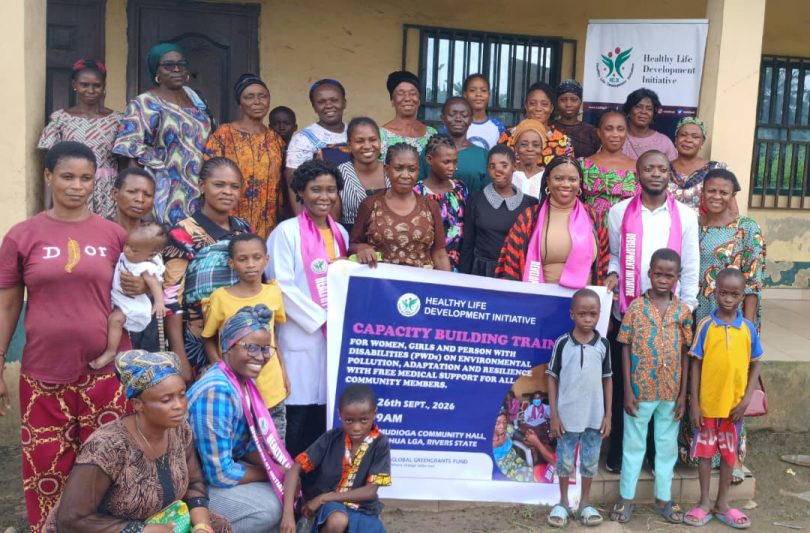
The Report released in Port Harcourt last week dwelt on environmental pollution, adaptation and resilience. This came with free medical support for all community members. It was held in Omudioga Community, Emohua Local Government Area, Rivers State, on 26 September 2026.
Details:
Omudioga is one of the oil impacted communities in the Niger Delta, Nigeria, where oil and gas exploration and related activities have been ongoing since 1956. The community has experienced environmental challenges associated with oil spills, gas flaring, and other oil and gas activities, with significant implications for the environment, livelihoods, health, and the general well-being of community members.
The training brought together women, girls, and persons with disabilities from Omudioga and neighbouring oil-impacted communities and LGA, including participants from Ibaa and Elele LGA. The activity was designed to strengthen participants’ understanding of environmental pollution and its impacts, adaptation and resilience strategies, gender equity, health protection and practical ways of working collectively to promote healthier, safer and more resilient communities.
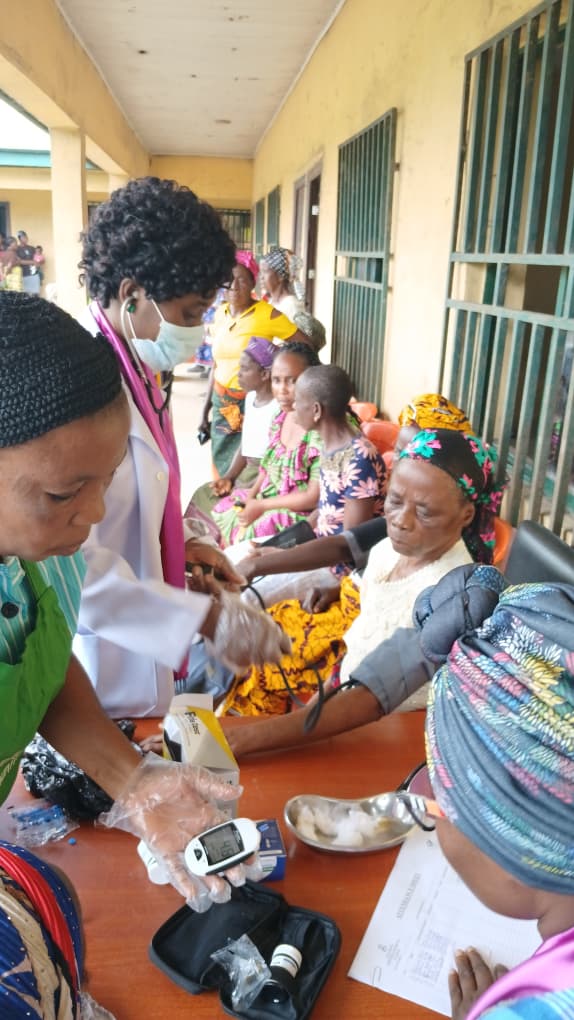
The programme commenced with a free medical check up for community members, sponsored by Healthy Life Development Initiative (HELDi) and assisted by health workers from the Rivers State Primary Health Care Management Board (RSPHCMB). The Dawn of Life Foundation also supported the medical outreach by providing services including TB screening with the Portable Digital X-ray (PDX) machine and HIV/Syphilis testing. The medical exercise provided community members with an opportunity to know their health status, receive basic medical advice and counselling, and access health services that may otherwise have been difficult to obtain because of financial or other barriers. It also emphasized the importance of regular health checks, early identification of health conditions and timely access to appropriate healthcare. A significant proportion of the beneficiaries recorded very high blood pressure readings, with some readings above 180 mmHg and, in some cases, above 200 mmHg. Blood sugar readings also showed some results, with some beneficiaries recording 3 mmol/L and others recording levels above 7 mmol/L. A few beneficiaries also tested positive for TB during the screening.
Following the medical exercise, the training session commenced with an interactive opening session during which participants introduced themselves and shared their expectations for the programme. In her opening remarks, the HELDi Coordinator encouraged participants to approach the training with open minds and to be willing to learn, relearn and unlearn certain practices and behaviours that may not be beneficial to their health, the environment and their communities. She emphasized that meaningful change requires individuals and communities to be willing to acquire new knowledge, reconsider harmful practices, and adopt healthier and more sustainable approaches. Participants were encouraged to actively participate, ask questions, share their experiences and apply the knowledge gained to their everyday lives and communities.
The session on environmental pollution and its impacts was facilitated by Dr. ThankGod Mmom, an experienced environmental professional. He began the session by providing participants with a simple explanation of environmental pollution, its major sources and the different forms of pollution that communities may encounter. Participants were encouraged to share their experiences and observations concerning pollution in their communities, including issues associated with oil spills, gas flaring and other environmental challenges. The facilitator explained how environmental pollution can affect human health, livelihoods, agriculture, water resources, biodiversity and the general quality of life, with particular attention given to women, girls, persons with disabilities, children and other vulnerable members of the population. He also explained how exposure to certain pollutants can affect pregnant women and potentially expose unborn children to health risks through maternal exposure.
Dr. ThankGod further emphasized the importance of collective action and community advocacy in addressing environmental challenges. He encouraged participants to understand that individuals may have limited influence when acting alone, but communities can achieve greater impact by working together, documenting environmental concerns, making legitimate demands and engaging relevant authorities and stakeholders. He encouraged participants to consider forming or strengthening community advocacy groups that can collectively raise concerns, demand accountability, promote environmental protection and advocate for improved health and environmental conditions. Participants were also encouraged to understand their responsibilities as community members and the importance of peaceful and constructive engagement in addressing environmental challenges. The session was highly interactive, with participants relating the discussion to their personal experiences and asking questions for further clarification.
Dr. Mfon Utin facilitated the session on adaptation strategies and community resilience. The session focused on practical ways individuals, families and communities can respond to environmental and climate-related challenges, reduce vulnerability and strengthen their capacity to cope with changing environmental conditions. Participants were encouraged to understand environmental risks, adopt safer practices, protect their health, diversify livelihoods, share relevant information, and strengthen community support systems. The facilitator emphasized that adaptation and resilience require collective action, personal responsibility and practical changes in everyday behaviour.
Participants were encouraged to pay greater attention to healthy and environmentally friendly lifestyles, including eating more natural and locally available foods where possible, reducing unnecessary exposure to harmful chemicals and avoiding the inappropriate use of herbicides and other chemicals, particularly in food production, processing and preservation. The facilitator emphasized the importance of following safe agricultural and food-handling practices and to avoid the use of chemicals due to limited knowledge on the appropriate quantity and the recommended safety guidelines.
The facilitator also encouraged participants to engage in regular physical activity and adopt healthier means of mobility where practical and safe. Participants were encouraged to walk or use bicycles for suitable short distance journeys instead of relying unnecessarily on cars, as reducing the use of motor vehicles can help reduce fuel consumption and emissions that contribute to air pollution. These practical adaptation measures were presented as individual and community actions that can contribute to healthier lifestyles and a cleaner environment.
The facilitator further emphasized teamwork, cooperation and community participation, with women encouraged to come together to form or strengthen cooperative groups that can provide economic and social support to members. The session highlighted the importance of inclusive decision-making, supporting vulnerable community members, protecting natural resources, sharing knowledge and building strong community networks. Participants were encouraged to recognize women, girls and persons with disabilities not only as people who may be affected by environmental challenges but also as important contributors to developing solutions and building resilient communities.
Mrs. Patience Stewart Tamuno facilitated the session on gender equity, focusing on fairness, inclusion and equal opportunities for women, men, girls, boys and persons with disabilities in community development and decision-making. She explained the difference between equality and equity and discussed how unequal access to resources, education, healthcare, economic opportunities, leadership and decision-making can affect individuals and communities. Participants were encouraged to promote fairness, respect, shared responsibilities and inclusive participation in community affairs.
Mrs. Patience also educated participants on their rights and the importance of knowing, protecting and speaking up for those rights. She emphasized that women, girls and persons with disabilities should be able to participate meaningfully in decisions affecting their lives and communities and should not be excluded because of gender, age or disability. Participants were encouraged to understand that knowing their rights is an important step towards seeking justice, demanding fair treatment and contributing to positive change within their communities. The session further encouraged participants to support one another and create an inclusive environment where everyone can express their views, participate in decision-making and contribute meaningfully to community development.
The health education session was facilitated by Mrs. Evelyn Obigwe, a health officer, who provided participants with practical information on health, preventive care and the importance of seeking appropriate medical attention. Participants actively sought clarification on various health concerns, including body changes and whether certain health conditions could be associated with environmental pollution. Questions were raised about issues such as menopause, blood sugar levels, blood pressure and other health concerns, as well as possible remedies for some health challenges when access to medical services is limited. The facilitator provided appropriate health education and emphasized the importance of regular medical checks, proper diagnosis and seeking professional medical advice rather than relying solely on self-medication or unverified remedies. Participants were encouraged to make use of available health facilities and seek medical attention whenever necessary.
To assess participants’ understanding and encourage teamwork, the participants were divided into groups and assigned different topics for discussion and presentation. The first group, led by Mrs. Comfort Uchenna and supported by Mrs. Dorathy Wonah, presented on environmental pollution and its impacts, demonstrating an understanding of the causes and effects of pollution and its implications for community health and livelihoods. The second group, led by Mrs. Roseline Onyemauche and Elizabeth Asomeji, presented on health and adaptation strategies, highlighting practical ways individuals and communities can protect their health and strengthen their ability to cope with environmental challenges. The third group, led by Theresa Amadi, presented on gender equity and demonstrated an understanding of the importance of fairness, inclusion, participation, rights and equal opportunities for women, girls and persons with disabilities. The quality of the group presentations demonstrated that participants had actively engaged with the training sessions and were able to apply the knowledge gained to practical community situations.
Overall, the training sessions were educative, informative, practical and highly interactive. Participants demonstrated strong interest throughout the programme by actively contributing their experiences, asking questions, participating in group discussions and presenting their understanding of the different topics. The facilitators created an open and participatory learning environment that enabled participants to discuss issues affecting their health, environment, livelihoods and communities without hesitation.
The combination of environmental education, collective environmental action, adaptation and resilience strategies, healthy lifestyle practices, gender equity, rights education and health education provided participants with a broader understanding of how environmental challenges can affect their health, livelihoods, relationships and overall well-being. Participants were not only encouraged to understand the problems affecting their communities but were also introduced to practical steps they can take individually and collectively to address some of these challenges.
The free medical checkup further strengthened the programme by enabling community members to assess their health status and receive basic health services, health education and appropriate guidance. The active participation of the community and the quality of the group presentations indicated that the training objectives were largely achieved. Participants expressed appreciation for the training and stated that their expectations were met. They particularly valued the opportunity to learn, share experiences, work together, ask questions freely and receive free medical support.
At the end of the programme, participants requested that similar capacity-building and health-support activities be conducted on a quarterly basis in their communities so that more community members can benefit and the knowledge and actions generated through the programme can be sustained. The request reflects the participants’ interest in continuous learning, community engagement and sustained support in addressing environmental, health and social challenges.
Overall, the programme strengthened community awareness, promoted inclusion and collective action, and provided women, girls, persons with disabilities and other community members with relevant knowledge and practical tools to better understand environmental pollution, protect their health, adapt to environmental challenges, understand and exercise their rights, work collectively, advocate for improved environmental conditions and contribute to building a healthier, safer and more resilient community.