
By Jeremy Godson
Customs Service has explained why government provided for waivers. The explanation seems necessary in the outcry by local manufacturers against reduced or zero import duty on certain categories of vehicles, tractors, and open door for rice importation.
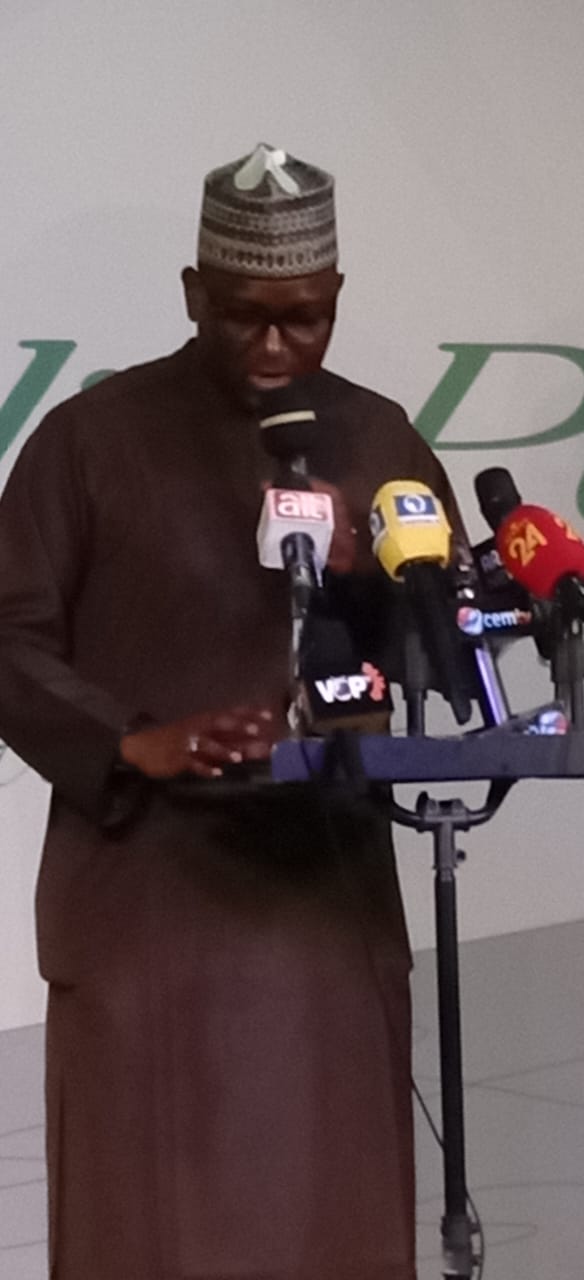
The explanation came at the media parley in Port Harcourt on Tuesday, July 21, 2026 by the National Public Relations Officer of the Customs, Deputy Comptroller Abdullahi Maiwada.
He made it clear that waivers are granted by the government and not by Customs, and that most of it is in laws and fiscal policies.
He said: “Now, we would like to talk about the 2026 fiscal policy measure. For vehicles with engine capacity above 2,000 cc, that is 2.0-liter engine, we are collecting a tax surcharge (which is called Green Tax Surcharge) of 2%, as well as 4% for vehicles above 4,000 cc.
“Now, the fiscal policy has also reduced what you call the IAT (that is Import Adjustment Tax) of vehicles. Brand new vehicles from 20% to 10%, and from 15% to 5% for used vehicles, among many other adjustments that have to do with reviving so many sectors of the economy. Where you have surcharges, where you have levies imposed, it is to make sure that the money is integrated into the economy so that it translates into boosting our manufacturing capacity.”
He said the 2026 fiscal policies of government were being implementing. “We are going to issue a statement after approval by the Comptroller-General of Customs and the Presidential Gas Initiative where some vehicles were exempted from payment of import duty.
“So these policies are not arbitrary, whatever the government is doing is to stimulate the economy and make sure each and every sector is developed. If there are items that are put at 0%, if there are items that are luxury items, they are put at 35% as well as levies. Why? To discourage importation of those items, to not discourage, to stop dumping of items into our country, to make sure that we are also a productive economy. So the policies are not arbitrary, please, my brother. They are well conceptualized. It does not mean that the businesses of clearance will not take place. We are putting more eye, we are deploying more resources, to make sure that illicit items do not find their way into the country through those ports. That is the definition and the context of state of emergency.
“So, whether it has been cancelled or not, state eyes are on Onne port, our resources are inclined towards Onne port and there are so many operations that are going on that I may not be able to reveal here.
“We are going to continue to deploy resources to make sure that we save Nigerians from those who are determined to import items that are inimical to the welfare of my child and your own child. Because if drugs come in, it will affect my child, it will affect you, and it will affect the society. That is the meaning of that state of emergency.”
$$