
By Ignatius Chukwu
Healthy Life Development Initiative (HELDi) has unveiled outcome of its research in a part of Rivers State showing women are coming down with high blood pressure.
HELDi officials said they conducted a capacity-building training for women, girls, and persons with disabilities (PWDs) in Odagwa, Etche Local Government Area, Rivers State, an oil-impacted region of the Niger Delta.
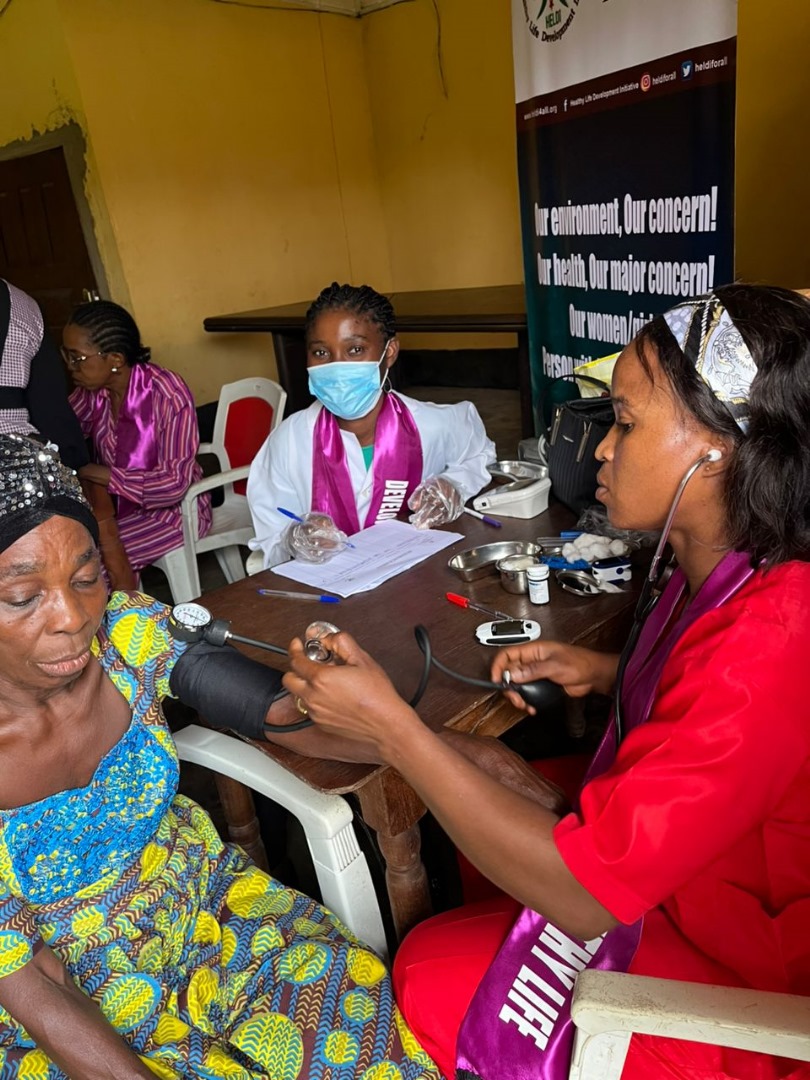
Screenings included blood pressure and blood sugar level checks, aimed at assessing general community health.
The analysis, according to the Executive Coordinator, Dr Mfon Utin, revealed that many women suffered elevated blood pressure and sugar levels, largely due to stress, economic hardship, and financial constraints.
The report said Dr. Ndidi Amaka Elem led the session on environmental pollution and gender equality. She explained various types and causes of pollution, including oil spills, gas flaring, and industrial waste, and their devastating impacts on ecosystems and public health.
She emphasized that women bear a disproportionate burden due to their caregiving roles and dependence on natural resources.
She also addressed gender equality and equity, noting that pollution further marginalizes women by limiting their access to land, clean water, and healthcare.
She stressed that environmental justice cannot be achieved without gender justice and advocated for the inclusion of women and girls in decision-making processes at all levels, starting from their communities. She advised participants to avoid farming in contaminated areas and encouraged them to demand accountability and promote sustainable environmental practices.
The training, titled “Environmental Pollution and Adaptation for Marginalized Women, Girls, and Persons with Disabilities in Oil-Polluted Communities,” aimed to empower these vulnerable groups with knowledge, tools, and strategies to address the growing challenges of environmental pollution.
The sessions were facilitated by Dr. Ndidi Amaka Elem, Dr. Mfon Utin, and Ms. Rosemary Eyidia, and were delivered in English, Pidgin English, and the native dialect to ensure full comprehension and inclusivity.
Mr. Ekene Chigbo served as the moderator. The event began with free medical check-ups for both training participants and other community members, including men fully supported by HELDi.
Dr. Mfon Utin focused on practical adaptation and mitigation strategies. She advocated for tree planting to absorb carbon dioxide and improve air quality and encouraged smart farming, even within household compounds due to limited farmland availability.
She cautioned against the use of genetically modified organism (GMO) seedlings, crops, and products, clearly highlighting their risks.
She also emphasized food security, mutual support among women, and the formation of cooperatives as a means to support small business startups and build collective resilience. She stressed the importance of women uplifting each other, fostering unity, and engaging in community development and local governance. She highlighted the need for effective waste management, healthy living habits, and the potential for step-down trainings as empowered by the African Centre for Leadership, Strategy & Development (Centre LSD), especially in cooperative formation and grassroots mobilization.
Ms. Rosemary Eyidia facilitated the health session, which covered a broad range of women’s health issues. She emphasized the importance of remedies available.
She also encouraged healthy eating habits, emphasizing the consumption of locally available foods like vegetables, plantains, and fruits to boost immunity and improve nutrition. She underscored the importance of exercise, hydration, and prioritizing self-care, especially in polluted and high-stress environments.
The training provided a safe and inclusive platform for women and girls to share their experiences and challenges living in one of Nigeria’s most polluted regions.
The report said the Niger Delta continued to suffer from oil spills, gas flaring, illegal refining, and hazardous waste dumping, all contributing to the destruction of livelihoods, displacement, and erosion of indigenous knowledge.
Participants were said to have learned about key environmental pollutants, including oil spills contaminating soil and water, gas flaring releasing toxic substances like benzene, and waste from illegal refining that compromises air and water quality. The health risks discussed included respiratory illnesses, reproductive issues, waterborne diseases, increased cancer risks, infertility, and mental health challenges stemming from environmental stressors and economic insecurity.
The socioeconomic impacts of pollution were also explored, such as the loss of farmland and fishing grounds, contaminated water sources, and an increased caregiving burden on women.
Participants expressed deep concern about pollution hazards and environmental degradation. They identified major challenges, including limited access to clean water and healthcare, exclusion from environmental decision-making, lack of climate adaptation education, and widespread poverty.
They recommended scaling up environmental education for more women and girls, government and oil company investment in pollution cleanup and community health, increased participation from grassroots communities, and supporting and strengthening women-led groups as key stakeholders in the fight for environmental justice.
Overall, the training was said to have significantly enhanced the capacity of women, girls, and PWDs in Odagwa to understand the intersection between pollution, health, and gender.
“Their voices were amplified, their resilience celebrated, and their commitment to collective advocacy affirmed. Many participants left the training feeling hopeful, empowered, and ready to organize for a cleaner, healthier, more supportive, and equitable future”, Dr Utin stated.
$$